Quick Facts
- Best Overall: Kennedy Space Center Visitor Complex (Florida)
- Best for Young Kids: Space Center Houston (Texas)
- Best Free Admission: National Museum of the U.S. Air Force (Ohio)
- Must-See 2026 Event: Grand reopening of Smithsonian National Air and Space Museum galleries (July 1, 2026)
- Best for History Buffs: Cosmosphere (Kansas)
- Best for Shuttles: California Science Center (Los Angeles)
The best space museums in the USA for families are the Kennedy Space Center, Space Center Houston, and the National Air and Space Museum. These family friendly space centers feature legendary artifacts like the Apollo 11 command module and Space Shuttle Atlantis, offering children a chance to connect with the history of the Apollo 11 mission through hands-on learning.
Planning the ultimate family trip? These top aerospace museums in the US offer more than just history; they provide immersive STEM education labs and are the best space museums for watching rocket launches. Whether you are aiming to see a retired orbiter or want to touch a piece of the moon, these destinations cater to every age group with accessible, educational, and genuinely awe-inspiring exhibits. To help you manage your budget and time, I’ve put together a look at the costs and requirements for current top picks.
| Museum | Adult Price | Child Price | Entry Requirement |
|---|---|---|---|
| Kennedy Space Center | $75+ | $65+ | Advance booking recommended |
| Space Center Houston | $29+ | $24+ | Timed-entry required |
| Smithsonian (DC/VA) | Free | Free | Timed-entry passes required |
| U.S. Space & Rocket Center | $30 | $20 | Walk-ins welcome |
| National Museum of the U.S. Air Force | Free | Free | No tickets needed |
The Heavy Hitters: NASA's Premier Visitor Centers
If you want the full astronaut experience, you start at the source. The Kennedy Space Center Visitor Complex in Florida is arguably the crown jewel of the Space Coast. For a parent, it is a dream because the layout is organized into Mission Zones. The showstopper here is Space Shuttle Atlantis, which is displayed at a 43.21-degree angle with its payload doors open, as if it is still orbiting Earth.
Must-See Artifact: Space Shuttle Atlantis Family Tip: Download the Space Center app before you arrive to track show times and find the nearest sensory-friendly 'Quiet Zones.'
If you are traveling with younger children, Space Center Houston is often the better choice. It is the official visitor center for NASA Johnson Space Center and feels a bit more like a high-tech science center. It attracts more than 1.25 million visitors annually and houses over 400 space artifacts within its massive educational complex. One of the best things to do here is the tram tour to see Mission Control. Kids get a huge kick out of seeing where the actual flight controllers sit.
Must-See Artifact: Saturn V rocket at Rocket Park Family Tip: Book the First Saturday morning for sensory-friendly hours if your little ones prefer lower lights and reduced noise.
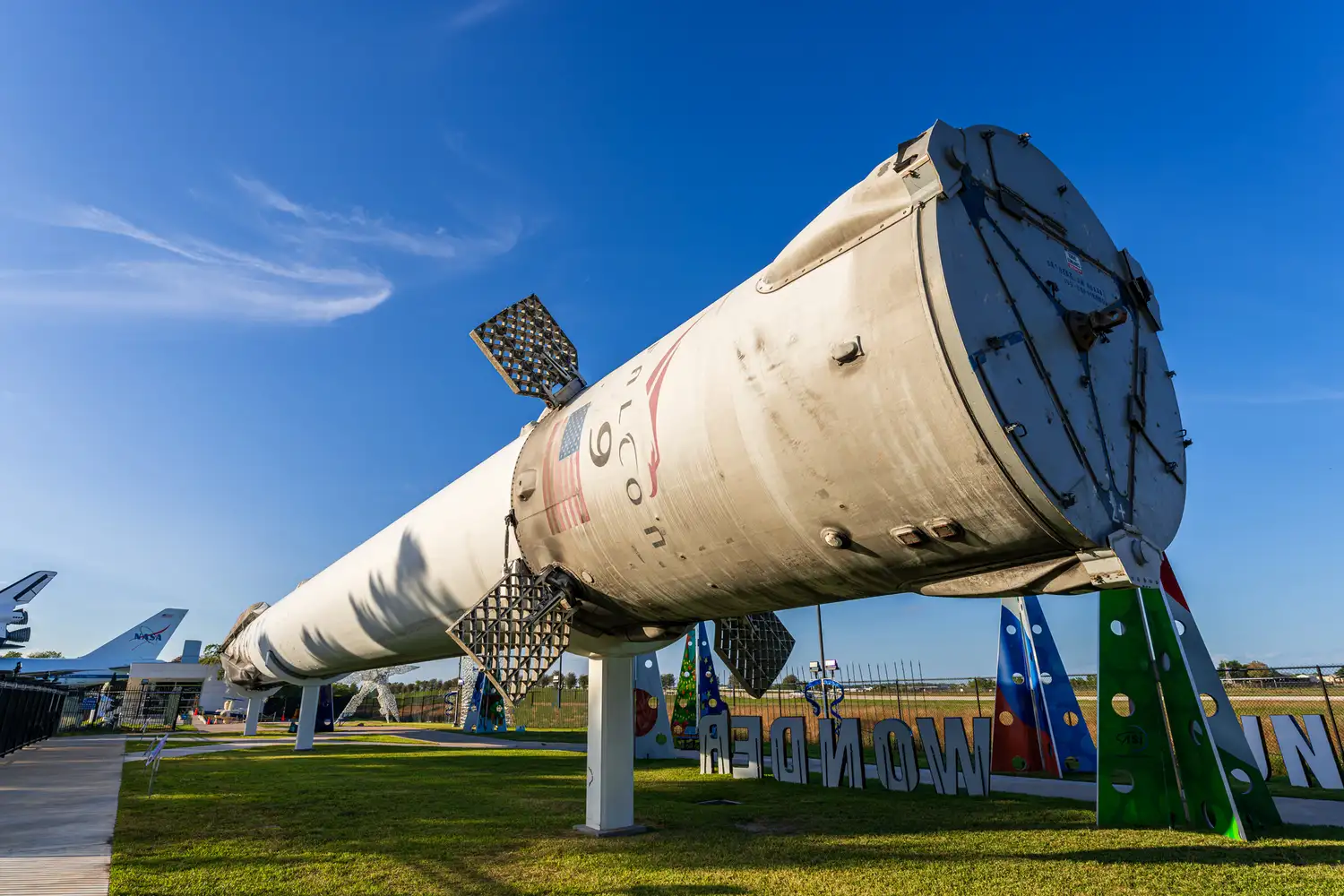
When you are planning how to plan a day at space center houston, remember that the tram tour takes about 90 minutes. I recommend doing it first thing in the morning. This is also one of the best space museums for watching rocket launches from nearby facilities, so check the schedule for SpaceX or Boeing Starliner milestones during your visit. Seeing those NASA visitor center exhibits up close makes the history feel much more personal for the kids.
Smithsonian Excellence: DC and Virginia Hubs
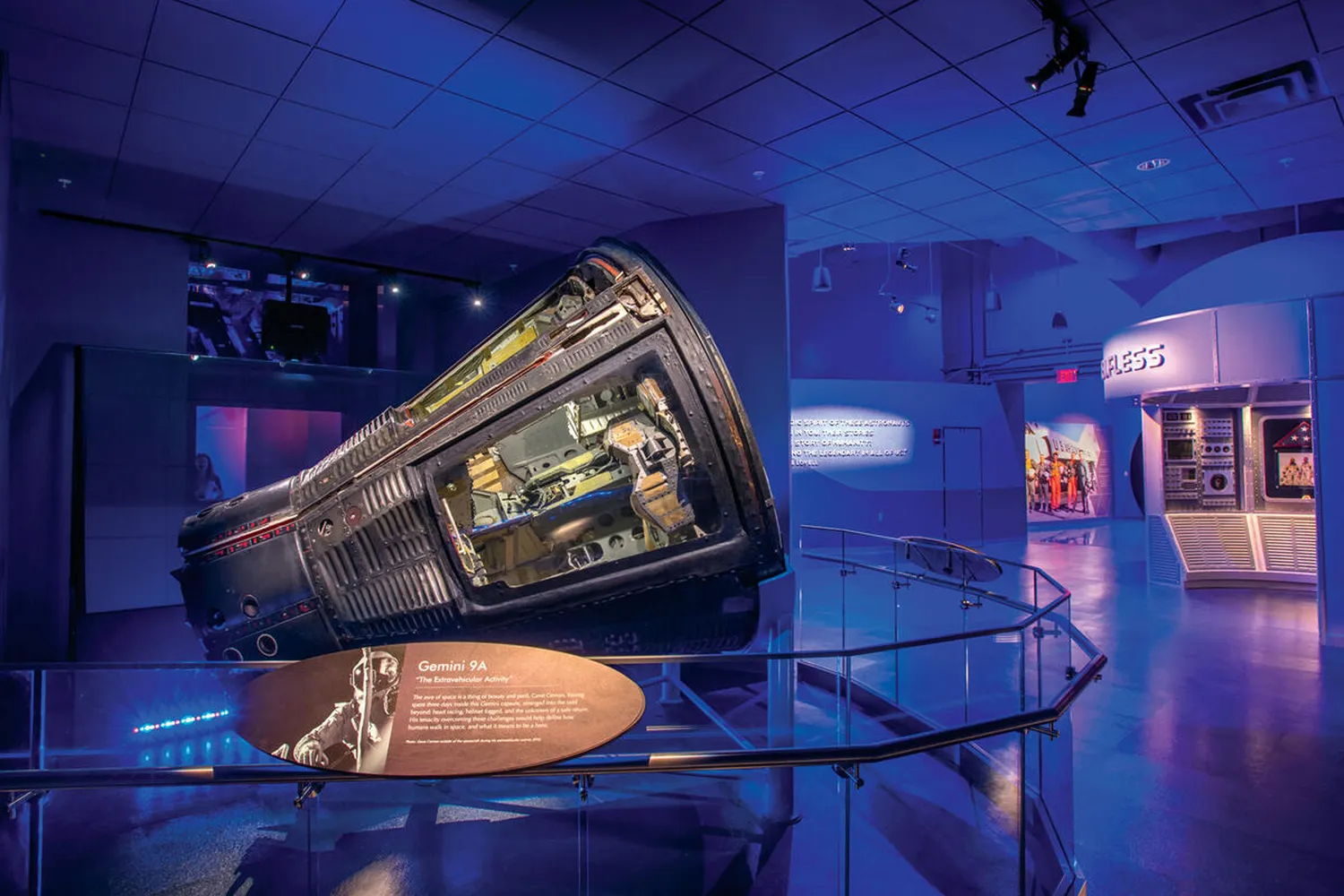
The Smithsonian offers two distinct experiences. The National Air and Space Museum on the National Mall in Washington, D.C., is currently undergoing a massive renovation, with all-new galleries set to be fully unveiled in mid-2026. This is where you’ll find the Apollo 11 command module and plenty of Moon rocks for the kids to touch.
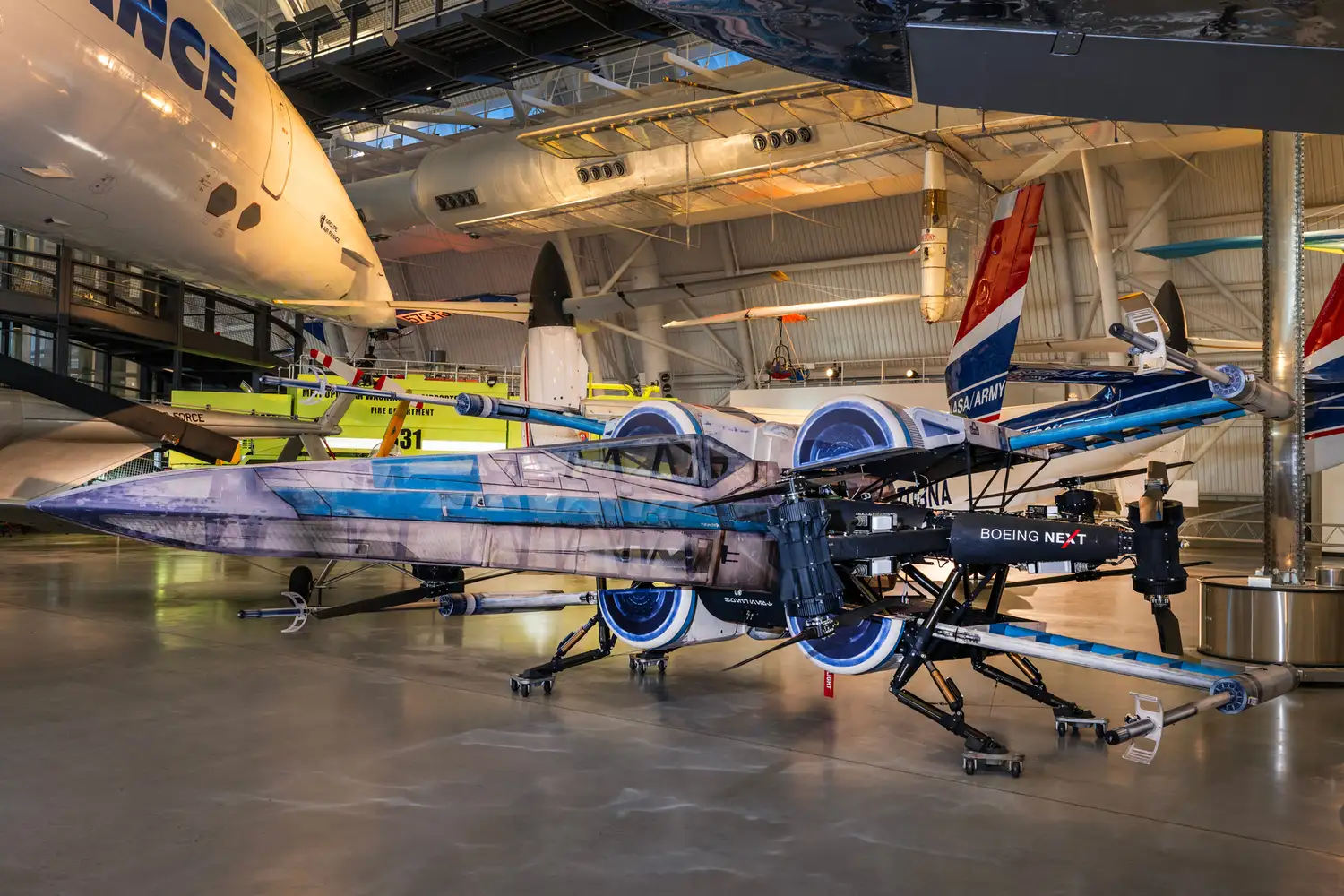
However, if you have a car, drive 40 minutes to the Steven F. Udvar-Hazy Center in Chantilly, Virginia. This massive hangar is where they keep the big toys. You can see Space Shuttle Discovery, which flew 39 missions into space. Because it is so large, it never feels crowded, which is a huge plus for families with strollers.
Must-See Artifact: Space Shuttle Discovery Family Tip: Timed-entry passes for the DC location are released in waves. Log on at exactly 12:00 PM EST six weeks before your visit to snag them.
When visiting space museums with sensory friendly options, the Smithsonian stands out. They offer pre-visit narratives and sensory maps that mark areas with high noise or bright lights. For a parent, knowing where a quiet corner is located makes all the difference when a toddler reaches their limit. Don’t miss the must see exhibits at national air and space museum such as the Lunar landers that look like giant spiders.
Where to See Retired Space Shuttles: California & Beyond
Beyond the East Coast and Texas, you can find the remaining orbiters in some unexpected places. The California Science Center in Los Angeles is currently working on the Samuel Oschin Air and Space Center, which will feature Space Shuttle Endeavour in a vertical, ready-to-launch position—the only place in the world where you can see this. It is truly a sight that will make your jaw drop.
If you are in New York City, look for the Intrepid Sea, Air & Space Museum. The shuttle Enterprise is housed on the deck of a retired aircraft carrier. It’s a great way to combine military history with space exploration.
For something really unique, head to the Cosmosphere in Hutchinson, Kansas. It might seem like it's in the middle of nowhere, but it holds the largest collection of Soviet spacecraft outside of Moscow. It’s a fascinating way to show kids both sides of the Space Race.
Must-See Artifact: Liberty Bell 7 (Cosmosphere) Family Tip: The Cosmosphere’s Dr. Goddard's Lab is a live show with liquid nitrogen and explosions—perfect for keeping elementaryers entertained.
Knowing where to see retired space shuttles allows you to build a road trip around these massive machines. Each site puts its own spin on the presentation, often including flight deck mock-ups and Starship models that hint at the future of Mars exploration.
Interactive Exploration & Military History
The U.S. Space & Rocket Center in Huntsville, Alabama, is the home of Space Camp. If your child is obsessed with the idea of becoming an astronaut, this is the place. It has a very "active" feel, with plenty of astronaut training simulators and interactive aeronautics exhibits for students. You can even walk under a suspended Saturn V rocket.
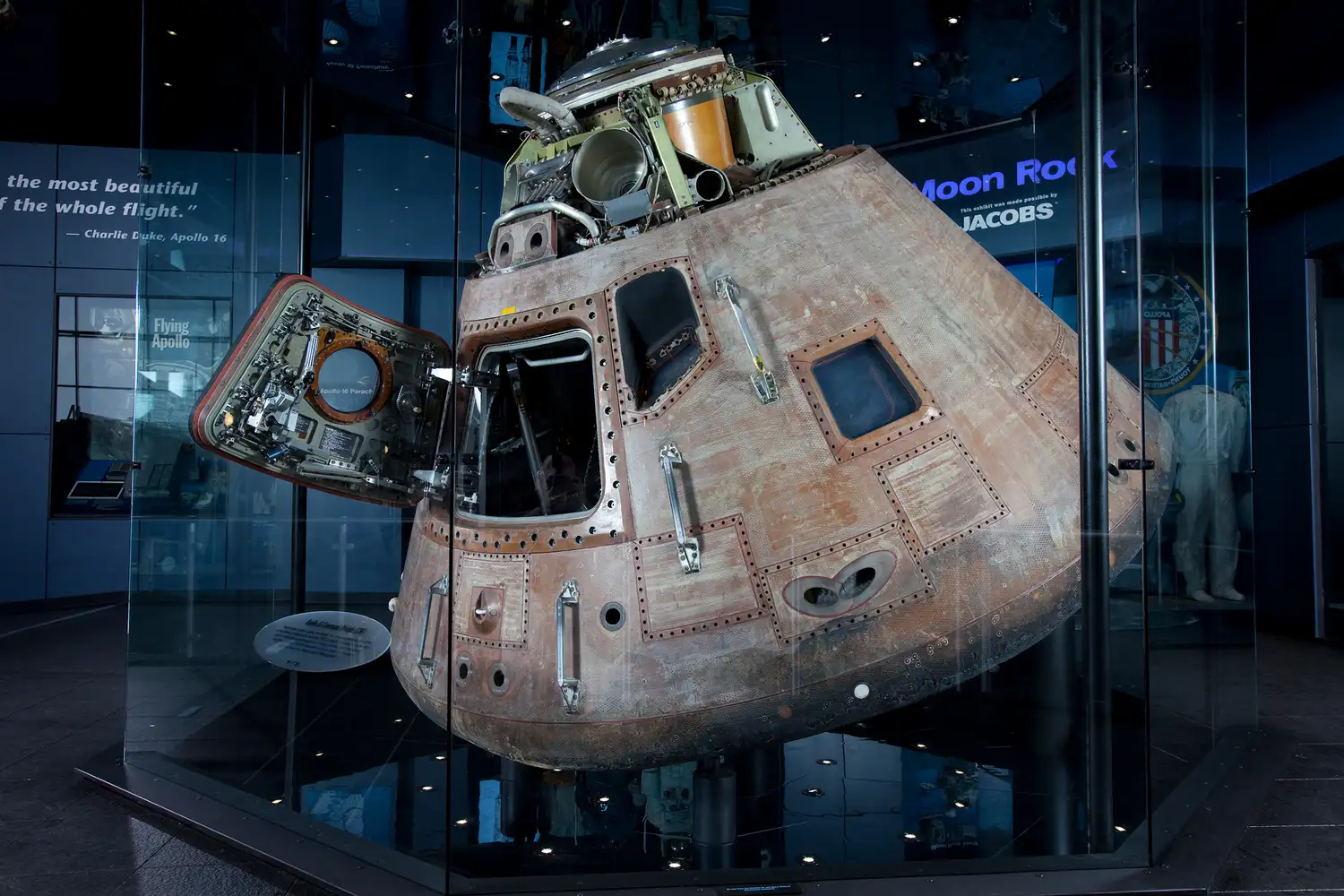
Must-See Artifact: Apollo 16 Command Module Family Tip: Check for "Family Astronaut Training" weekends where you and your kids can run a simulated mission together.
If you are looking for a budget-friendly option, the National Museum of the U.S. Air Force in Dayton, Ohio, is a hidden gem. It is the world's oldest and largest military aviation museum, featuring a collection of more than 360 aircraft and missiles available to the public with free admission. Their fourth building houses the Space Gallery, which includes the Titan IV rocket and a variety of experimental planes.
Must-See Artifact: Avrocar (the 'Flying Saucer') Family Tip: Because the museum is so large (several hangars), bring a stroller even if your child is an older toddler. You will do a lot of walking.
For those near the Gulf Coast, the National Naval Aviation Museum in Pensacola is incredible, though you should check current access requirements for non-DoD ID holders. It houses the remains of training cockpits where kids can sit and pretend to fly.
Planning Your 2026 Space Odyssey
As we look toward 2026, the world of space travel is heating up. NASA's Artemis program is aiming to put boots back on the moon, and space centers are updating their exhibits in real-time. One major milestone to watch for is the scheduled launch of the Nancy Grace Roman telescope in late 2026, which many museums will celebrate with live viewing parties and updated Planetarium shows.
If you are visiting the West Coast, don't forget the Jet Propulsion Laboratory (JPL) in Pasadena. While not a traditional museum, they offer public tours that are the best family friendly space museums in the us alternative for tech-savvy teens. You have to book these tours months in advance, often exactly at the start of the month.
Many of these facilities have also improved their accessibility. Look for space centers with meet an astronaut programs that offer "relaxed performances" or smaller group settings. Being able to ask a real astronaut what they ate for breakfast is a memory your kids won't forget.
Logistics Checklist:
- Check for "Space Pass" bundles that include lunch with an astronaut.
- Look for museums with outdoor air parks for "run-around" time.
- Pack noise-reduction headphones for loud 4D theater experiences.
- Buy tickets online to avoid the 100-degree Florida or Texas heat in summer lines.
FAQ
What is the best space museum to visit in the United States?
The Kennedy Space Center Visitor Complex in Florida is widely considered the best because it combines historical spacecraft with active launch pads. It offers the most comprehensive look at the past, present, and future of NASA missions in a highly interactive environment.
Where can I see a real space shuttle on display?
You can see the four retired orbiters at the Kennedy Space Center in Florida (Atlantis), the Steven F. Udvar-Hazy Center in Virginia (Discovery), the California Science Center in Los Angeles (Endeavour), and the Intrepid Sea, Air & Space Museum in New York (Enterprise).
Are space museums suitable for young children?
Yes, most top space centers are designed for families and feature dedicated play areas, hands-on STEM education labs, and sensory-friendly resources. Many exhibits use lights and sounds specifically designed to engage younger children’s curiosity.
Do space museums offer interactive flight simulators?
Most major locations, including the U.S. Space & Rocket Center and Space Center Houston, offer astronaut training simulators. These vary from simple cockpit mock-ups for toddlers to full-motion experiences that mimic the g-force of a launch for older kids and adults.
The year 2026 is shaping up to be an incredible year for "space-cationers." With the Smithsonian finishing its renovations and the new vertical shuttle display in LA nearing completion, there has never been a better time to ignite that spark of curiosity in your children. Just remember to book those timed-entry tickets early, pack your comfortable walking shoes, and get ready to look up at the stars together!