Quick Facts
- Top Fine Dining: La Pergola (3 Stars)
- Top Trattoria: Roscioli
- Top Local Value: Sora Lucia
- 2026 New Entry: INEO
- Signature Pasta: Carbonara at Da Enzo al 29
- Essential Snack: Pizzarium (pizza by the slice)
- Gastronomic Status: 26 Michelin-starred restaurants in Rome for 2026
The best restaurants in Rome for 2026 offer a captivating balance of historic Cucina Povera and innovative Modern Italian bistronomy. This Rome dining guide 2026 highlights everything from three-Michelin-starred icons for special occasions to legendary trattorias serving the city's most authentic carbonara and cacio e pepe.
The New Class: 2026 Michelin Stars and Openings
To understand the Roman table in 2026 is to understand a city in the midst of a culinary renaissance. According to the 2026 Michelin Guide for Italy, the capital has solidified its position as the second-most decorated city in the country, boasting 26 starred restaurants including one three-star, three two-star, and 22 one-star establishments. This surge in quality has been fueled by the momentum of the Jubilee, which saw Rome’s tourism sector generate approximately €11.6 billion in spending through the first half of 2025 alone.
The 2026 awards notably celebrated Heinz Beck of La Pergola with the Mentor Chef Award, confirming his enduring influence over the city’s fine dining landscape. However, the real excitement lies in the "theatrical" dining trend where kitchens are no longer hidden away but become part of the guest experience. New entries into the Michelin firmament, such as INEO, located within the Palazzo Naiadi, offer a sensory journey that bridges the gap between historic palazzo locations and forward-thinking Modern Italian bistronomy.
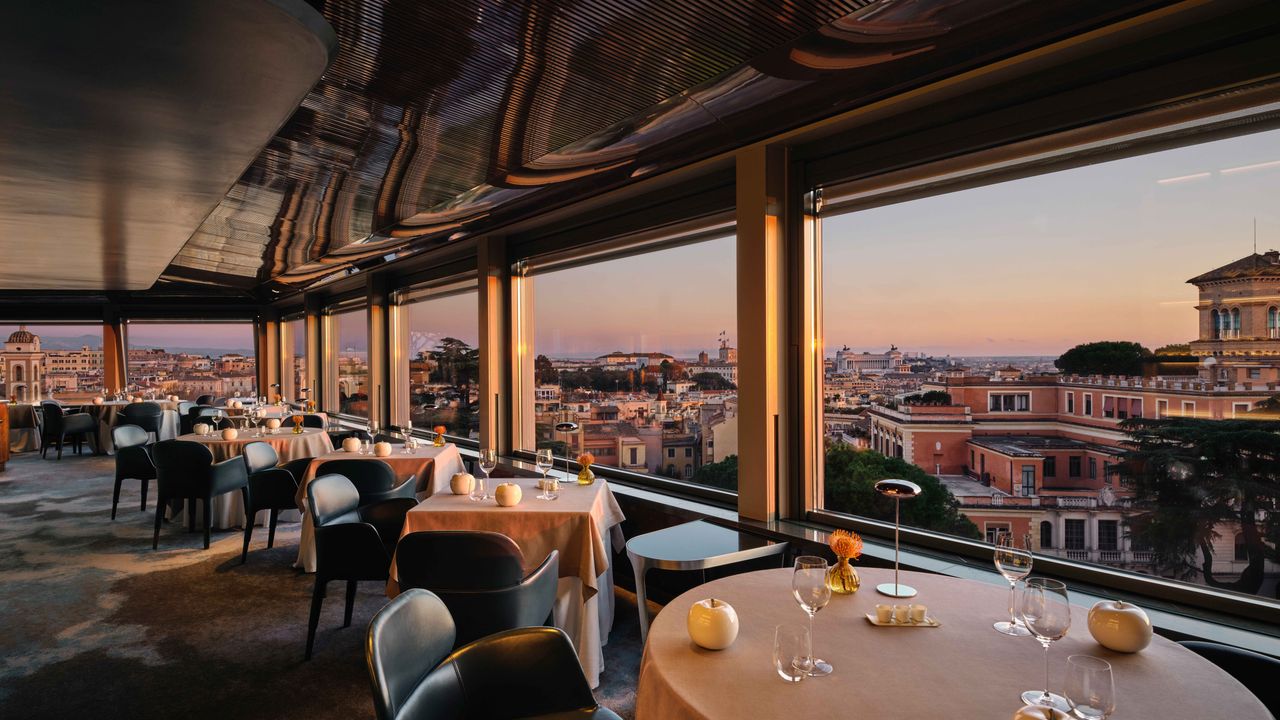
INEO
- Address: Piazza della Repubblica, 48
- Reservation Difficulty: 5/5
- Must-Order Dish: The "Incontro" tasting menu featuring seasonal foraging elements.
All’Oro
- Address: Via del Vantaggio, 14
- Reservation Difficulty: 4/5
- Must-Order Dish: Coda alla Vaccinara (oxtail) Ferrero Rocher.
Fine Dining and Panoramic Views: Special Occasions
When searching for Michelin star restaurants in Rome for special occasions, the dialogue inevitably begins at the top of Monte Mario. La Pergola remains the only three-starred temple in the city. Dining here is less about a meal and more about an immersion into a collection of rare tapestries, 18th-century bronze candelabra, and a view that makes the dome of Saint Peter's feel close enough to touch. The service is a choreographed ballet, and the wine cellar—a labyrinthine vault—houses treasures that span centuries.
For those who prioritize wine as much as the plate, Achilli al Parlamento is an essential pilgrimage. With a world-class wine collection of 4,000 labels, it offers sommelier-led wine pairings that are arguably the most sophisticated in the city. These high-end experiences represent the pinnacle of best restaurants in Rome, where the history of the setting is as rich as the truffle-beaded sauces.
La Pergola
- Address: Via Alberto Cadlolo, 101
- Reservation Difficulty: 5/5 (Book 3-4 months ahead)
- Must-Order Dish: Fagotelli La Pergola.
La Terrazza at Hotel Eden
- Address: Via Ludovisi, 49
- Reservation Difficulty: 4/5
- Must-Order Dish: Grilled lobster with seasonal Mediterranean herbs.
Achilli al Parlamento
- Address: Via del Prefetti, 15
- Reservation Difficulty: 3/5
- Must-Order Dish: Any dish suggested as part of a vintage wine pairing.
Authentic Roman Trattorias: The Heart of Cucina Romana
To truly know Rome, one must eat where the marble dust of history settles on the tablecloth. The authentic Roman trattorias for traditional pasta dishes are concentrated in neighborhoods like Testaccio and near the Pantheon. Here, the Cucina Romana revolves around the Quinto Quarto offal tradition—a legacy of the city’s historic slaughterhouses. It is a cuisine of resourcefulness, turning humble cuts into masterpieces like trippa alla Romana or pajata.
At Armando al Pantheon, the air is thick with the scent of guanciale crisping in a pan. This is one of the best restaurants for carbonara and cacio e pepe in Rome, where the pasta is always perfectly al dente and the sauce is a creamy emulsion of egg and Pecorino Romano, never marred by the addition of cream. Similarly, Da Enzo al 29 in Trastevere has maintained its status as a local hero, where the Amatriciana and Gricia pasta are served in a boisterous atmosphere that feels unchanged by the decades.
Armando al Pantheon
- Address: Salita de' Crescenzi, 31
- Reservation Difficulty: 5/5
- Must-Order Dish: Spaghetti alla Carbonara.
Da Enzo al 29
- Address: Via dei Vascellari, 29
- Reservation Difficulty: 4/5 (No reservations, expect a queue)
- Must-Order Dish: Rigatoni alla Gricia.
Trattoria Da Danilo
- Address: Via Petrarca, 13
- Reservation Difficulty: 3/5
- Must-Order Dish: Cacio e pepe prepared tableside in a cheese wheel.
Rome’s Jewish Ghetto: A Seasonal Specialty
The Jewish Ghetto is perhaps the most evocative corner of the city, a place where the dining guide for Rome's Jewish Ghetto and kosher food becomes a lesson in cultural endurance. The star of the show here is the Carciofi alla giudia, or Jewish-style artichokes. These are not merely cooked; they are transformed. Deep-fried twice until the outer leaves shatter like glass and the heart becomes a tender, nutty confit.
Ristorante Piperno remains the grande dame of the neighborhood, perched at the top of a quiet piazzetta and serving these golden thistles with unmatched elegance. For a more contemporary take on the traditions of the Ghetto, Ba'Ghetto offers a diverse menu that respects kosher laws while embracing modern Mediterranean flavors.
Ristorante Piperno
- Address: Via del Monte de' Cenci, 9
- Reservation Difficulty: 3/5
- Must-Order Dish: Carciofi alla giudia (Seasonal).
Ba'Ghetto
- Address: Via del Portico d'Ottavia, 57
- Reservation Difficulty: 2/5
- Must-Order Dish: Stuffed zucchini flowers.
Modern Bistros and Street Food: Affordable Local Eats
For those looking for affordable local eats in Rome away from the crowds, the city’s modern bistros and street food stalls offer a creative outlet for younger chefs. Retrobottega and Orma are leading this charge with farm-to-table foraging and experimental techniques. They represent a Rome that is not afraid to look beyond its borders while still respecting the local terroir.
The conversation about the best pizza by the slice in Rome 2026 always begins and ends with Gabriele Bonci’s Pizzarium. Using a 72-hour fermented dough and toppings that change with the morning market, this is pizza elevated to an art form. It is sold "al taglio" (by the cut), meaning you point to the size you want and pay by weight. In Trastevere, Pianostrada offers a stylish setting for modern Italian plates, where the courtyard is draped in greenery and the kitchen produces some of the most delicate fritti in the city.
Pizzarium
- Address: Via della Meloria, 43
- Reservation Difficulty: 1/5 (Standalone counter)
- Must-Order Dish: Potato and mozzarella pizza or seasonal zucchini flower slice.
Pianostrada
- Address: Via delle Zoccolette, 22
- Reservation Difficulty: 4/5
- Must-Order Dish: Artisanal supplì and seasonal puntarelle salad.
Eggs
- Address: Via di San Francesco a Ripa, 15
- Reservation Difficulty: 3/5
- Must-Order Dish: The Carbonara "Strapazzo" (deep-fried carbonara on a stick).
Practical Rome Dining Guide: Tips and Logistics
Navigating the dining scene in the Eternal City requires a bit of local savvy. The 2026 Jubilee has made reservations more critical than ever; for the most famous spots, you should aim to book through official portals 3-4 weeks in advance.
Roman Food Glossary
| Term | Meaning | Must-Try Location |
|---|---|---|
| Al Taglio | Pizza by the slice, sold by weight. | Pizzarium |
| Coperto | A standard cover charge for bread and service. | Most Trattorias |
| Quinto Quarto | The "fifth quarter" - offal used in Roman recipes. | Checchino dal 1887 |
| Supplì | Fried rice balls with a mozzarella core. | Supplizio |
| Puntarelle | Chicory sprouts served with anchovy dressing. | Da Enzo al 29 |
To avoid a tourist trap, look for these three red flags: menus with photos of the food, waiters standing outside trying to pull you in, and a menu that lists "Carbonara with cream." A true Roman kitchen uses only eggs, Pecorino, guanciale, and black pepper. When the bill comes, remember that the "coperto" is normal, and while tipping is not mandatory in the American sense, rounding up the bill or leaving a few euros for exceptional service is always appreciated.
FAQ
What are the best areas to eat in Rome?
Testaccio is arguably the most authentic neighborhood for traditional dishes, while Trastevere offers a vibrant mix of historic and modern eateries. For high-end dining, the areas around Via Veneto and the historic center near the Pantheon house several Michelin-starred venues. The Jewish Ghetto is the go-to for unique seasonal specialties like fried artichokes.
Do you need to book restaurants in Rome in advance?
For 2026, the answer is a resounding yes. Due to the high influx of visitors for the Jubilee, popular restaurants like Armando al Pantheon or Roscioli require booking at least three to four weeks ahead. Many modern bistros now use online reservation systems, making it easier to secure a table before you leave home.
How much does a typical meal cost in Rome?
A casual lunch of pizza al taglio or a panino can cost between €8 and €15. A dinner at a mid-range trattoria typically ranges from €35 to €55 per person, including wine. Fine dining at a Michelin-starred establishment like La Pergola or La Terrazza can exceed €200 to €350 per person for a tasting menu.
What food is Rome most famous for?
Rome is world-renowned for its four core pasta dishes: Carbonara, Amatriciana, Cacio e Pepe, and Gricia. It is also famous for Carciofi alla giudia (fried artichokes), Supplì (fried rice balls), and its unique offal dishes like Coda alla Vaccinara. Rome’s pizza tradition is split between the thin, crispy "Scrocchiarella" round pizza and the thick-crust "Pizza al Taglio."
How can you spot a tourist trap restaurant in Rome?
Standard indicators of a tourist trap include menus translated into more than four languages with faded photos of the dishes, the presence of a "bot" or "barker" outside inviting people in, and the inclusion of non-traditional items like "Fettuccine Alfredo" or Hawaiian pizza. Also, look at the time locals eat; if the restaurant is full of people at 6:00 PM, it is likely catering to tourists, as Romans typically dine at 8:30 PM or later.