Our Top Picks
- The Absolute Best: ZEISS Terra ED 8x42 – Unmatched clarity and German engineering built for the toughest trails.
- The Best Value: Celestron TrailSeeker ED 8x42 – Professional-grade extra-low dispersion glass at a price that leaves room for more permits.
- The Ultralight Choice: Swarovski CL Companion – Elite optics in a package so light you will forget it is around your neck until the rare lifer appears.
For the best birding binoculars in rugged terrain, we recommend 8x42 models with a magnesium alloy chassis and nitrogen purging for total weatherproofing. These essential features combined with ED glass ensure color accuracy and a wide field of view for tracking birds in dense canopy or across exposed ridgelines.
| Model | Weight | Glass Type | Best For |
|---|---|---|---|
| ZEISS Terra ED 8x42 | 25.4 oz | ED Glass | Professional durability |
| Celestron TrailSeeker ED | 23.5 oz | ED Glass | Best overall value |
| Swarovski CL Companion | 17.3 oz | SWAROBRIGHT | Ultralight backpacking |
Expert Testing Methodology: The Backcountry Standard
When I am out in the Grand Tetons or pushing through the humid undergrowth of the Olympic Peninsula, I do not just look for clear images. I look for gear that survives. My team and I put these optics through a "Ruggedness Checklist" that would make most casual birders wince. We have dropped them on granite, left them in rain-soaked tents, and transitioned from freezing morning air to midday heat to test their internal fog-proofing.
The global binoculars market was valued at approximately USD 1.18 billion in 2025 and is projected to reach USD 1.81 billion by 2034, which tells me one thing: people are finally realizing that high-quality glass is an investment in how they see the world. In my experience, the difference between a successful solo expedition and a frustrating trip often comes down to your exit pupil and light transmission rate when the sun starts to dip.
Key Benchmarks: Ruggedness Standards To be considered backcountry-ready, binoculars must meet specific builds. A magnesium alloy chassis provides strength without the weight of steel. Furthermore, look for an IPX7 rating, which means the optic can withstand immersion in water up to one meter deep for 30 minutes. For those heading into extreme humidity, argon or nitrogen-purged barrels are non-negotiable to prevent internal fogging.
The All-Rounders: Best 8x42 Binoculars for Diverse Terrains
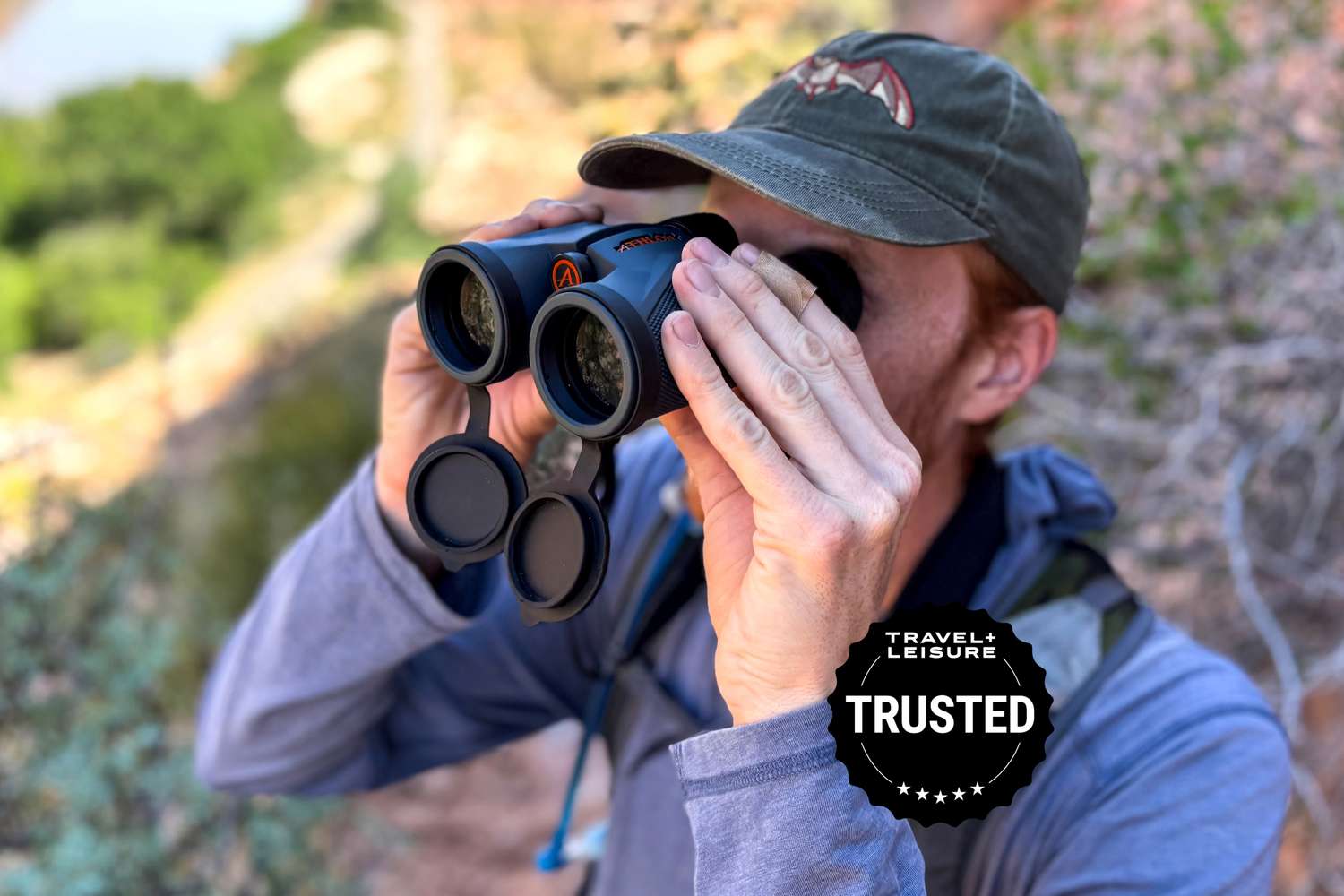
In the backcountry, 8x42 binoculars for birding are the gold standard. They provide a wider field of view than higher-magnification models, making it significantly easier to find a warbler flitting through a thick oak canopy. After testing dozens of pairs, two models consistently stood out for their balance of grit and grace.
Celestron TrailSeeker ED 8x42
The Celestron TrailSeeker ED is the workhorse of the group. What struck me immediately was the close focus distance of only 6.5 feet. This is vital when you are in thick brush and a bird pops up just a few steps away. The rubber armoring feels incredibly secure in wet hands, and the phase-corrected BAK4 prisms ensure the resolution stays sharp from edge to edge.
The Details
- Objective Lens Diameter: 42mm
- Magnification: 8x
- Glass: Extra-low dispersion (ED)
- Prism Type: Dielectric coated BAK4
- Weight: 23.5 oz
| Buy If | Pass If |
|---|---|
| You want professional features without the $1,000 price tag. | You prioritize the absolute lowest weight possible. |
| You need excellent close-focus performance for butterflies and birds. | You primarily bird in wide-open plains where 10x is better. |
ZEISS Terra ED 8x42
If there is one brand that defines reliability, it is Zeiss. The Terra ED model is designed specifically for rough handling. In 2024, roof prism binoculars accounted for nearly 60% of the market share because they are more compact and durable, and the Terra ED is the pinnacle of this design. The large, smooth focus wheel was easy to operate even while I was wearing heavy liner gloves during a crisp morning in the high desert.
The Details
- Objective Lens Diameter: 42mm
- Magnification: 8x
- Glass: SCHOTT ED glass
- Weatherproofing: Nitrogen-purged, waterproof
- Eye Relief: 18mm
| Buy If | Pass If |
|---|---|
| You value German engineering and a very robust build quality. | You are on a strict entry-level budget. |
| You wear glasses and need generous eye relief for a full field of view. | You want a more "grippy" aggressive rubber texture. |
The Ultralight & Compact Choice: Best for Long-Distance Backpacking
When you are counting every ounce for a through-hike, a full-sized 8x42 setup might feel like a burden. However, you do not have to sacrifice color accuracy just to save weight. Rugged binoculars for hiking need to be small enough to fit in a chest harness or a side pocket without bouncing around.
Swarovski CL Companion 8x30
Swarovski is often seen as a luxury, but in the backcountry, it is a performance tool. The CL Companion weighs in at only 17.3 ounces. During my last trip, the magnesium alloy chassis took a direct hit against a rock wall while I was scrambling, and it did not even skip a beat. The wide field of view binoculars for tracking moving birds usually require a larger objective lens, but Swarovski’s proprietary coatings make this 30mm lens feel like a 42mm in terms of brightness.
NOCS Provisions Pro Issue 8x42
For those who want a more modern, "cool" aesthetic without losing the rugged edge, NOCS is the way to go. These are waterproof bird watching binoculars built for the adventure set. They have a distinct ribbed rubber armoring that makes them incredibly easy to hold when your hands are slick with sweat or rain.
The Details
- Weight: 24 oz (NOCS) / 17.3 oz (Swarovski)
- Chassis: Magnesium alloy
- Waterproofing: IPX7
- Best For: Fast-and-light mountain travel
High-Altitude Specialists: 10x42 Optics for Open Vistas
While 8x42 is my general recommendation, sometimes the terrain demands more reach. If you are glassing for raptors along the ridges of the Sierra Nevada or looking across wide river valleys, 10x42 binoculars provide that extra bit of detail. The trade-off is a narrower field of view and a more sensitive image—any hand tremor is magnified.
Vortex Viper HD 10x42
Vortex is famous for its "VIP Warranty," which is essential for rugged backcountry birding. If you drop them off a cliff, they fix them. The Viper HD uses anti-reflective multi-coatings on all air-to-glass surfaces, which I found particularly helpful when dealing with the harsh glare of high-altitude snowfields. It effectively eliminates chromatic aberration, giving you a crystal-clear look at the feather patterns on a distant hawk.
Nikon Monarch M7 10x42
The Monarch line has been a staple for years, but the M7 update brought a locking diopter—a feature I didn't know I needed until I used it. No more accidentally bumping your settings out of alignment while pulling the binos out of your pack. These are durable nitrogen-purged binoculars for humid climates, and they handle the transition from a warm truck to a cold trail better than almost anything in their class.
Key Benchmarks: Understanding ED Glass Extra-low dispersion (ED) glass isn't just a marketing buzzword. It is a specific type of glass that prevents various light wavelengths from focusing at different points. In plain English: it gets rid of that purple or green "fringing" (chromatic aberration) you see around dark objects against a bright sky. If you want to identify a bird by its true colors, ED glass is mandatory.
Budget-Friendly Power: Best Entry-Level Rugged Binoculars
You do not need to spend four figures to get into the backcountry birding game. There are some incredible budget-friendly rugged binoculars for beginner birders that still offer high-end features like BAK4 prisms and O-ring seals.
Athlon Optics Midas G2 8x42
The Athlon Midas is a sleeper hit in the birding community. It offers an incredibly wide field of view and surprisingly high light transmission for its price point. While the rubber armoring feels a little less premium than a Zeiss, the actual optical performance is startlingly close. It is fully waterproof and fog-proof, meeting the baseline requirements for any serious hike.
The Details
- Price Range: Under $300
- Glass: ED glass
- Coating: ESP Dielectric Coating
- Warranty: Lifetime
| Buy If | Pass If |
|---|---|
| You are just starting out and want the best "bang for your buck." | You want the most compact/lightest design. |
| You need a reliable backup pair for your vehicle or kit. | You require the most refined edge-to-edge sharpness. |
Backcountry Maintenance & Care Tips
Buying the best birding binoculars is only half the battle; keeping them functional in the wild is the other half. When you are miles from the nearest lens cleaning station, you need a plan.
First, never use the tail of your shirt to wipe your lenses. Backcountry dust is often composed of tiny silica particles that will scratch your anti-reflective lenses instantly. I always carry a dedicated lens pen and a microfiber cloth stored in a sealed zip-top bag. If your optics get hit with salt spray or mud, rinse them with fresh water first (assuming they are waterproof binoculars for backcountry birding) before touching the glass with a cloth.
During high-intensity hiking, I also recommend switching from a standard neck strap to a harness system. A harness keeps the binoculars tight against your chest, preventing them from swinging into rocks or trees while you are navigating technical terrain. Plus, it distributes the weight across your shoulders, which is a lifesaver on 10-mile days.
FAQ
Is 8x42 or 10x42 better for birding?
For most backcountry scenarios, 8x42 is superior because it offers a wider field of view and a brighter image in low light. The lower magnification also makes it easier to keep the image steady while breathing hard after a steep climb. 10x42 is better for open landscapes and stationary viewing where you need to see fine details at a distance.
What features should I look for when buying birding binoculars?
Look for ED glass for color accuracy, a magnesium alloy chassis for durability, and a wide field of view. For birding specifically, a short close focus distance (under 7 feet) is very helpful for observing birds in thick brush.
Are waterproof binoculars necessary for bird watching?
In the backcountry, yes. Weather is unpredictable, and waterproof binoculars are not just about rain; they are O-ring sealed to keep out dust and debris that can ruin the internal mechanics and optics over time.
What does close focus mean in birding binoculars?
Close focus refers to the shortest distance at which the binoculars can project a sharp image. For birders who also enjoy looking at butterflies, dragonflies, or nearby warblers, a close focus of 6 to 8 feet is ideal.
How important is eye relief for bird watchers with glasses?
It is critical. Eye relief is the distance your eye can be from the eyepiece while still seeing the entire field of view. If you wear glasses, you should look for at least 15mm to 18mm of eye relief to ensure you don't feel like you are looking through a straw.
Are high-end binoculars worth the investment for birding?
If you spend significant time outdoors, yes. High-end optics provide better light transmission, which extends your birding hours into the dawn and dusk periods when birds are most active. They also use more durable materials that can survive years of hard use in rugged environments.