To walk through the heavy wooden doors of Donna Camilla Savelli Rome is to experience a shift in the very frequency of the city. Outside, the cobblestone streets of the Trastevere neighborhood pulse with the life of a thousand vespas and the chatter of crowded trattorias. Inside, the roar of the Eternal City falls away, replaced by the cool, hushed air of a 17th-century monastery. This is not merely a hotel; it is a portal into the Baroque soul of Italy, where the limestone walls still seem to hold the quiet prayers of the centuries.
Our Top Picks
- Architectural Pedigree: Stay in a building designed by Francesco Borromini, the master of Italian Baroque architecture.
- Unique Accommodations: Sleep in converted nuns' cells that balance monastic simplicity with VRetreats modern luxury.
- The Hidden Garden: Access a peaceful inner courtyard featuring the historic Fountain of the Angioletto and ancient magnolia trees.
- Skyline Views: A rooftop terrace offering 360-degree views stretching from Janiculum Hill to the Vittoriano.
- On-site History: A private 17th-century chapel still overseen by active local nuns, offering a rare living connection to the past.
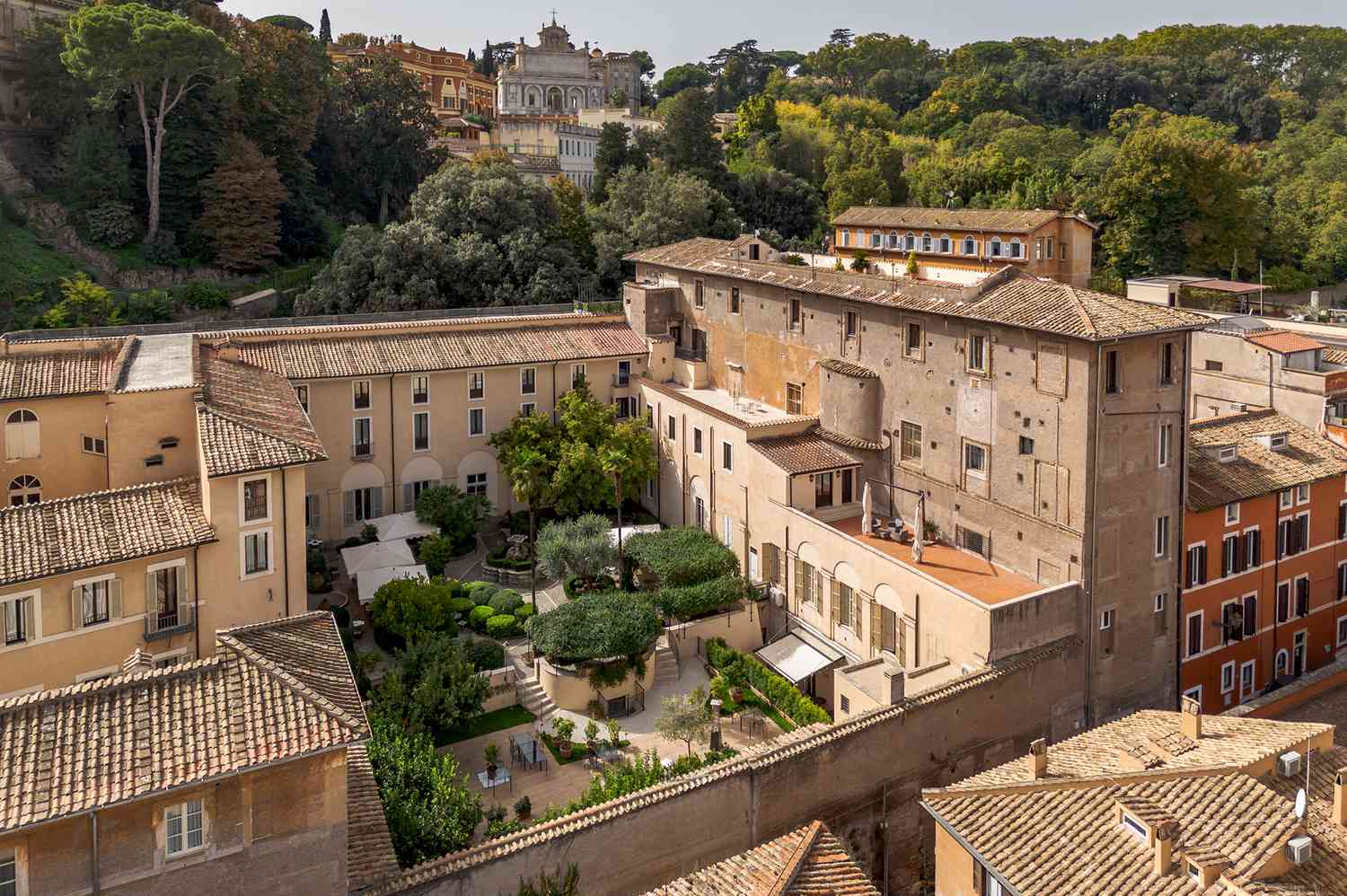
Donna Camilla Savelli Rome is a historic 17th-century convent hotel originally designed by the Baroque master Francesco Borromini. Located in the Trastevere neighborhood, the building has served as a monastery for centuries and currently maintains a chapel overseen by local nuns. Its architectural significance is highlighted by original frescoes, wood-beamed ceilings, and a classic courtyard containing the Fountain of the Angioletto.
Architect of the Baroque: The Borromini Legacy
History in Rome is rarely a flat line; it is a sprawling, layered tapestry. In 1642, Duchess Camilla Virginia Savelli commissioned Francesco Borromini to design a convent for the Order of the Seven Sorrows. Borromini, known for his revolutionary use of curves and light, brought a distinct Baroque aesthetic to the project. Unlike his rival Bernini, who favored grandiosity, Borromini’s work here is intimate and contemplative.
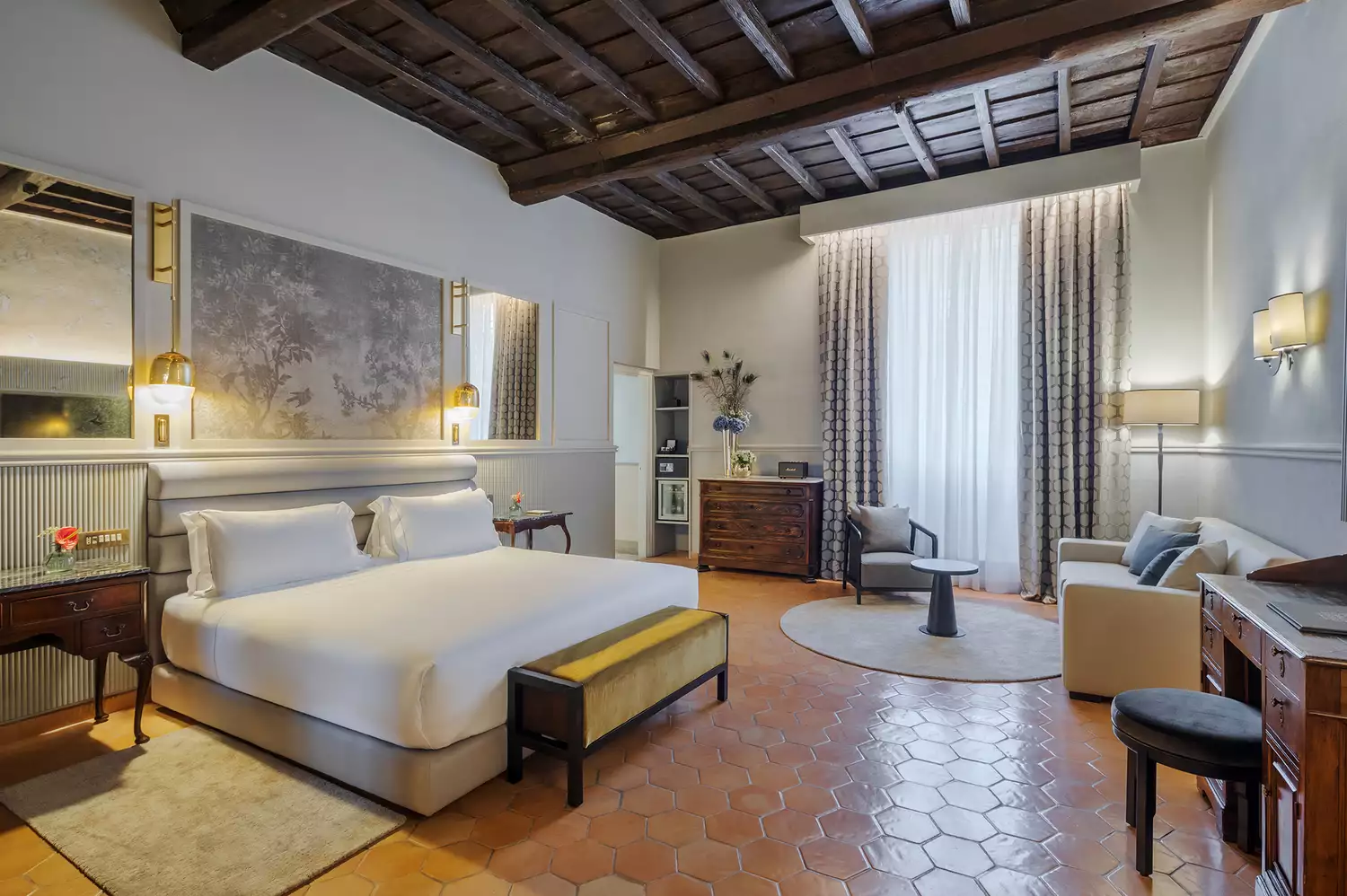
The heart of the design is the central cloister. As you walk along the corridors, the rhythm of the arches and the play of light against the plaster reflect a master who understood how space affects the human spirit. The courtyard garden provides a center of gravity for the entire property. Here, among the meticulous hedges, sits the Fountain of the Angioletto, its water providing a soft acoustic backdrop that has remained unchanged for hundreds of years. This commitment to architectural preservation ensures that every corner of the property feels tethered to the 17th century.
While the hotel is a sanctuary, the Borromini connection extends across the city. His other works, such as the Eitch Borromini hotel located in the Collegio Innocenziano near Piazza Navona, are famous for their secret passages and an original spiral staircase designed by Borromini that remain accessible to visitors today. Staying at Donna Camilla Savelli Rome offers a similar, though perhaps more serene, immersion into this architectural era.
Monastic Chic: From Nuns' Cells to Luxury Suites
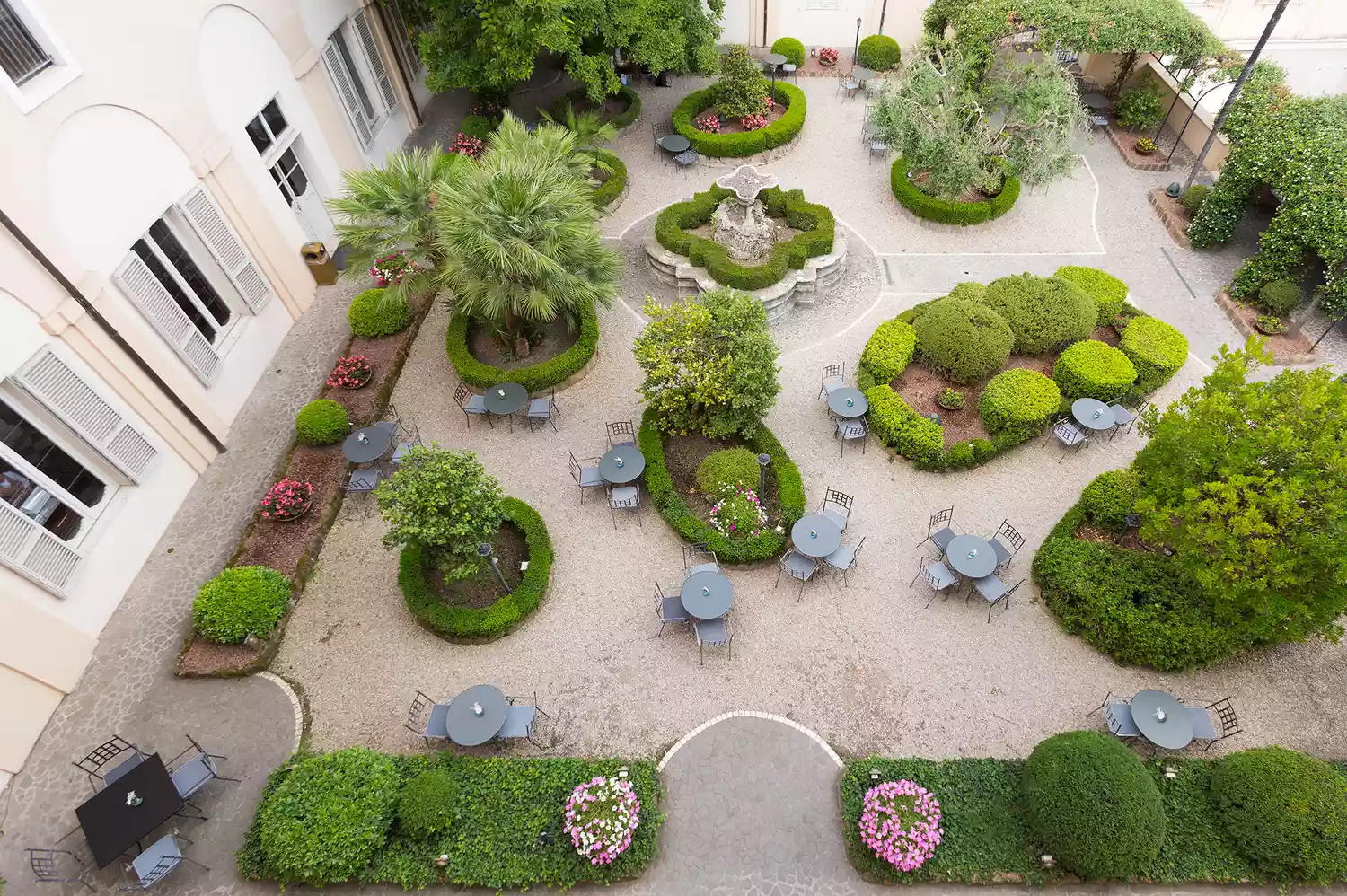
Transforming a 17th-century monastery into a high-end boutique sanctuary requires a delicate touch. VRetreats has managed to balance the building's ecclesiastical heritage with the demands of modern luxury. The hotel offers 94 rooms and suites, many of which were reimagined from original nuns' cells. These accommodations range in size, but they all share a sense of refined quiet luxury.
Choosing the right room is essential for managing expectations. The Classic rooms, while compact, offer a true sense of history with their thick walls and terracotta tiling. For travelers seeking more space, the Premiere Suite is the crown jewel of the property. This suite is uniquely situated to offer a view through the building's monumental rose window—a feature that allows the morning light to pour across the room in a way that feels almost celestial.
Inside the rooms, you will find:
- Restored frescoes and original wood-beamed ceilings that serve as reminders of the building's previous life.
- Modern, minimalist decor that uses a neutral palette to highlight the historic architectural features.
- En-suite bathrooms that blend contemporary fixtures with heritage materials like local stone.
- Modern amenities including high-speed internet and climate control, seamlessly integrated to avoid disturbing the Baroque aesthetic.
For those traveling as a group, choosing family friendly accommodation at Donna Camilla Savelli is simplified by the availability of interconnecting rooms and larger suites that retain the charm of the historic convent while providing much-needed floor space.
The Living Soul: Nuns, Grottos, and Secret Gardens
What truly distinguishes Donna Camilla Savelli Rome from other luxury hotels in Trastevere Rome is its "living soul." Unlike a museum, this building still breathes its original purpose. A small group of three local nuns remains on-site, overseeing the beautiful 17th-century chapel. It is not uncommon to hear the faint sound of hymns or the rustle of robes as they move through the shared spaces of the building.
The property also hides a 17th-century grotto, an underground space that whispers of the building's monastic past. This atmosphere of quiet contemplation is a rare find in modern Rome. The quiet luxury hotels in the Trastevere neighborhood of Rome often struggle with the noise of the surrounding nightlife, but the thick monastic walls of this property create a genuine acoustic barrier.
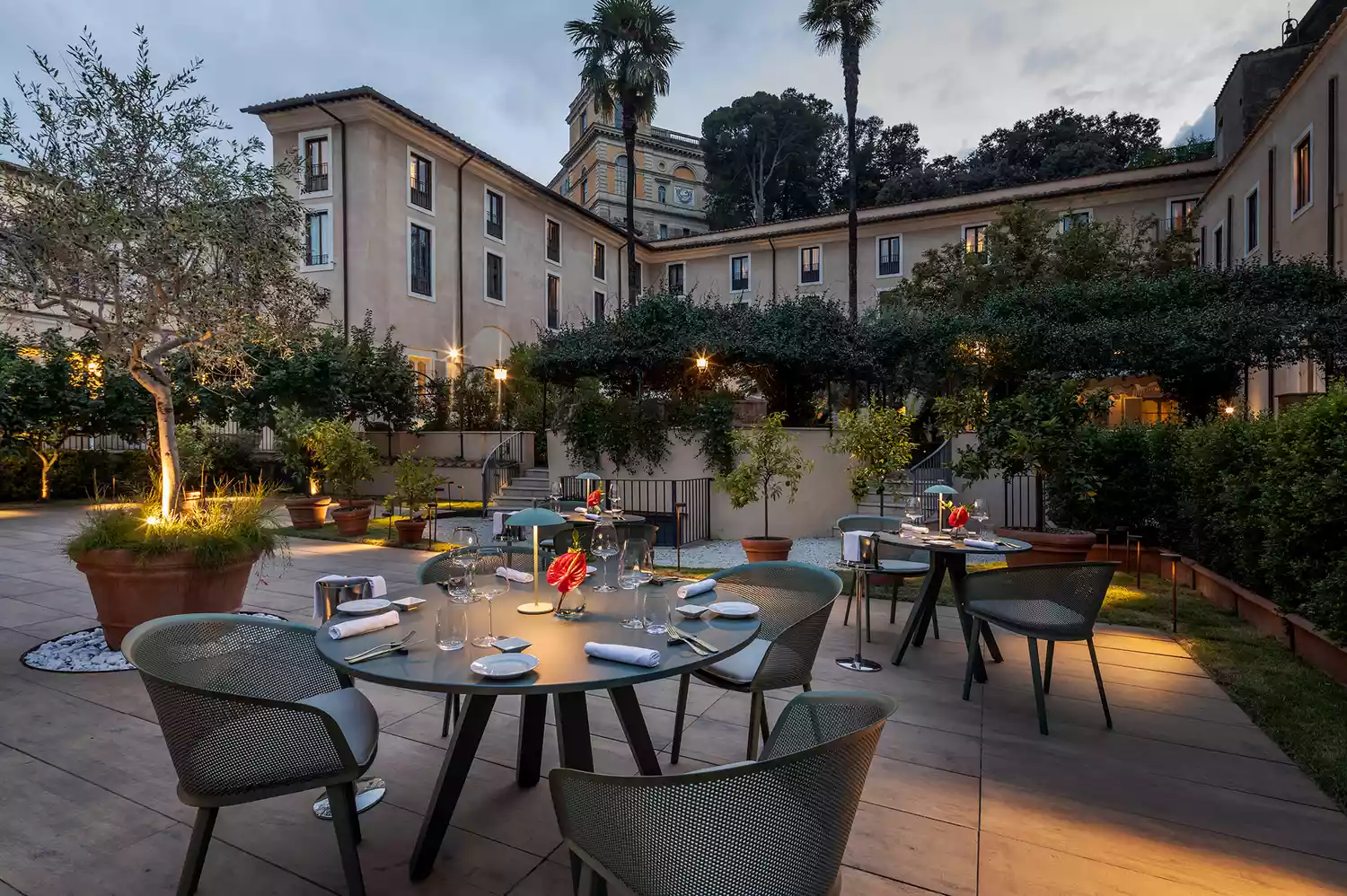
The garden is perhaps the best place to experience this. The scent of blooming magnolia trees fills the air, and the meticulously maintained hedges create small alcoves for reading or reflection. It is one of the few historic convent hotels in Rome with private gardens large enough to provide a true sense of isolation from the urban environment.
Rooftop Sunsets and Renaissance Menus
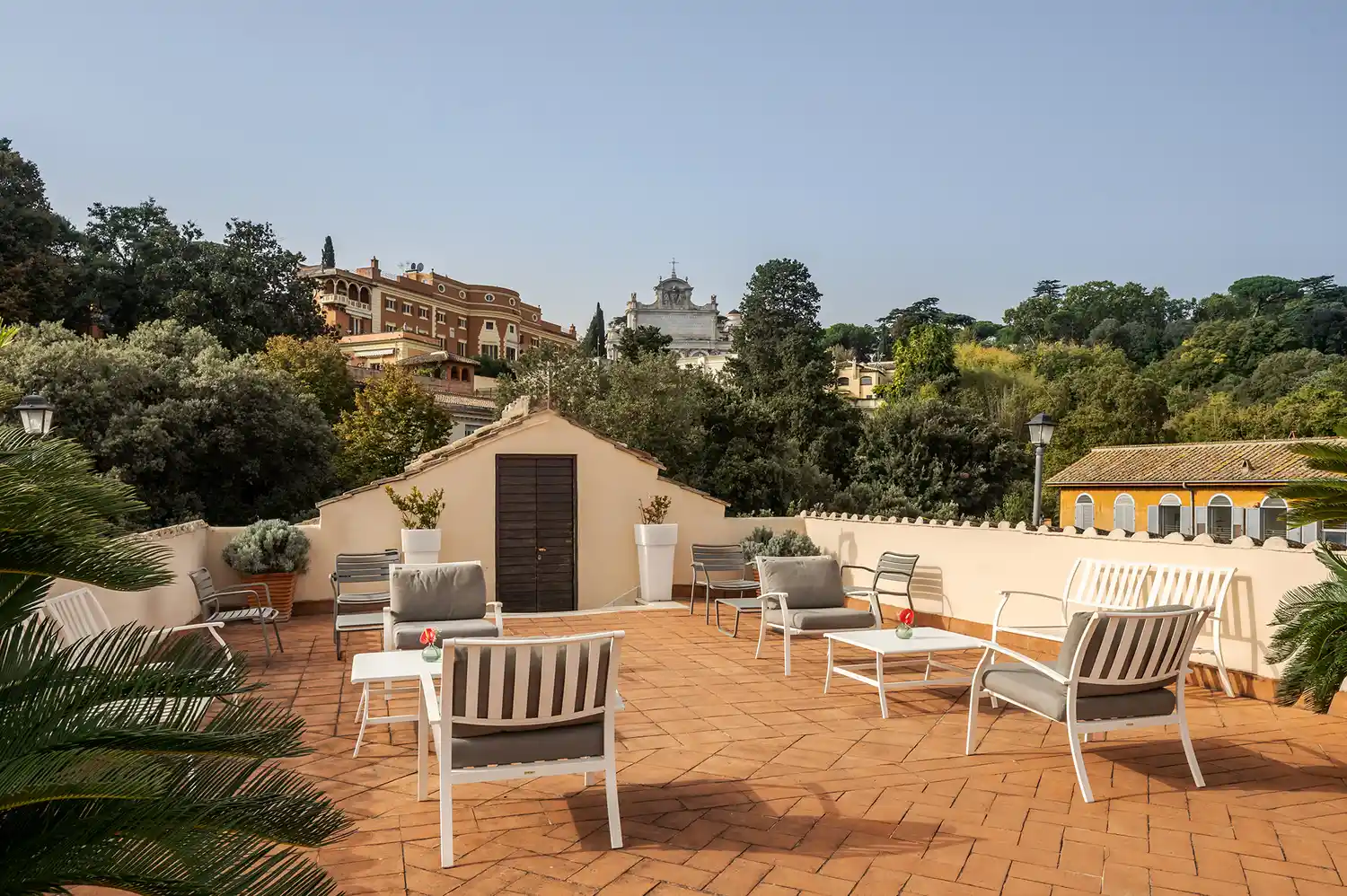
As the sun begins to set, the experience shifts from the grounded, earthy tones of the cloister to the heights of the panoramic rooftop terrace. From this vantage point, guests can enjoy 360-degree views of the Eternal City. You can trace the skyline from the lush greenery of Janiculum Hill all the way to the white marble of the Vittoriano and the majestic dome of St. Peter’s Basilica. Watching the sunset from this height, cocktail in hand, is a ritual that justifies the stay on its own.
The culinary journey at Donna Camilla Savelli Rome is equally steeped in history. The on-site restaurant, il Ferro e il Fuoco (Iron and Fire), is led by Chef Emidio Ferro. The dining philosophy focuses on Mediterranean gastronomy and local Lazio wines, but with a unique twist.
The restaurant offers a specialty known as the Renaissance Menu. This culinary archaeology recreates dishes that might have been served in the 16th and 17th centuries, using ingredients and techniques that highlight the history of the region. Whether dining inside the grand dining hall or under the stars in the courtyard garden, the meal feels like a natural extension of the Borromini architecture.
Dining Highlights:
- Regional Gastronomy: Seasonal ingredients sourced from the Roman countryside.
- Wine Selection: A curated list of Lazio labels that celebrate the volcanic terroir of the nearby hills.
- Historical Atmosphere: The restaurant name reflects the iron and fire of the kitchen, but the service is polished and serene.
Strategic Base: Location and Logistics
Situated at Via Garibaldi 27, the hotel offers a strategic base for exploring Rome. While Trastevere is known for its bohemian energy, Donna Camilla Savelli Rome sits on a quieter slope of the neighborhood, slightly removed from the loudest bars but only a five-minute walk from the heart of the action.
For many visitors, the location provides a perfect balance. You are a mere 10-minute walk from the Vatican and St. Peter's Square, and a short stroll across the Tiber brings you into the historic center near Piazza Navona and the Pantheon. In a city where vehicle access is restricted, the hotel offers the rare luxury of on-site parking, making it a viable choice for those exploring Italy by car.
The modern renovations of the historic Donna Camilla Savelli Rome have also made it a premier venue for celebrations. The combination of the Borromini designed interiors, the private chapel, and the lush gardens makes it one of the most sought-after locations for boutique weddings and events in Rome.
FAQ
Where is Donna Camilla Savelli located in Rome?
The hotel is located at Via Garibaldi 27 in the Trastevere neighborhood. It sits at the foot of Janiculum Hill, providing a quiet retreat that is still within walking distance of both the Vatican and the bustling heart of central Trastevere.
What is the history of Donna Camilla Savelli?
The building dates back to 1642, when it was commissioned by Duchess Camilla Virginia Savelli. It was designed by the famous Baroque architect Francesco Borromini as a convent for the Order of the Seven Sorrows. It remained a religious institution for centuries before the historic convent hotels Rome trend saw it converted into a luxury property under VRetreats.
Was Donna Camilla Savelli originally a monastery?
Yes, it functioned as a 17th-century monastery. The original layout of the building, including the central cloister and the individual rooms that were once nuns' cells, has been largely preserved during its transition into a luxury hotel.
Does Donna Camilla Savelli have a rooftop terrace?
Yes, the hotel features a panoramic rooftop terrace. It offers guests a 360-degree view of the Roman skyline, including landmarks like Janiculum Hill, the Pantheon, and the Vittoriano monument.
Is Donna Camilla Savelli suitable for weddings and events?
The property is highly regarded for weddings and events due to its historic architecture and private outdoor spaces. With its own consecrated chapel, a wide courtyard garden, and several elegant meeting rooms, it provides a dramatic and authentic Baroque backdrop for both ceremonies and receptions.