Our Top Picks
The Eno SingleNest is my top recommendation for a lightweight backpacking hammock due to its incredible balance of 400lb tensile strength and a minimal 16oz trail weight. It is the ultimate solo shelter for trekkers who value a quick, high-strength portable hammock setup that packs down to the size of a grapefruit.
The Eno SingleNest is a highly portable camping hammock made from 70D nylon taffeta, supporting up to 400 pounds. To set it up safely, attach it to trees 10-15 feet apart using nautical-grade carabiners and tree straps at a 30-degree hang angle for maximum comfort.
Quick Facts
- Primary Material: High-tenacity 70D nylon taffeta for maximum durability
- Weight Capacity: Supports up to 400 pounds with triple-stitched seam construction
- Trail Weight: Approximately 16 ounces, making it ideal for solo expeditions
- Unfolded Dimensions: 9 feet 6 inches long by 4 feet 10 inches wide
- Attachment System: Includes two anodized 7075 aluminum nautical-grade carabiners
- Storage: Integrated stuff sack doubles as a gear pocket while hanging
- Best Use: Solo backpacking, day-hiking, and minimalist camping
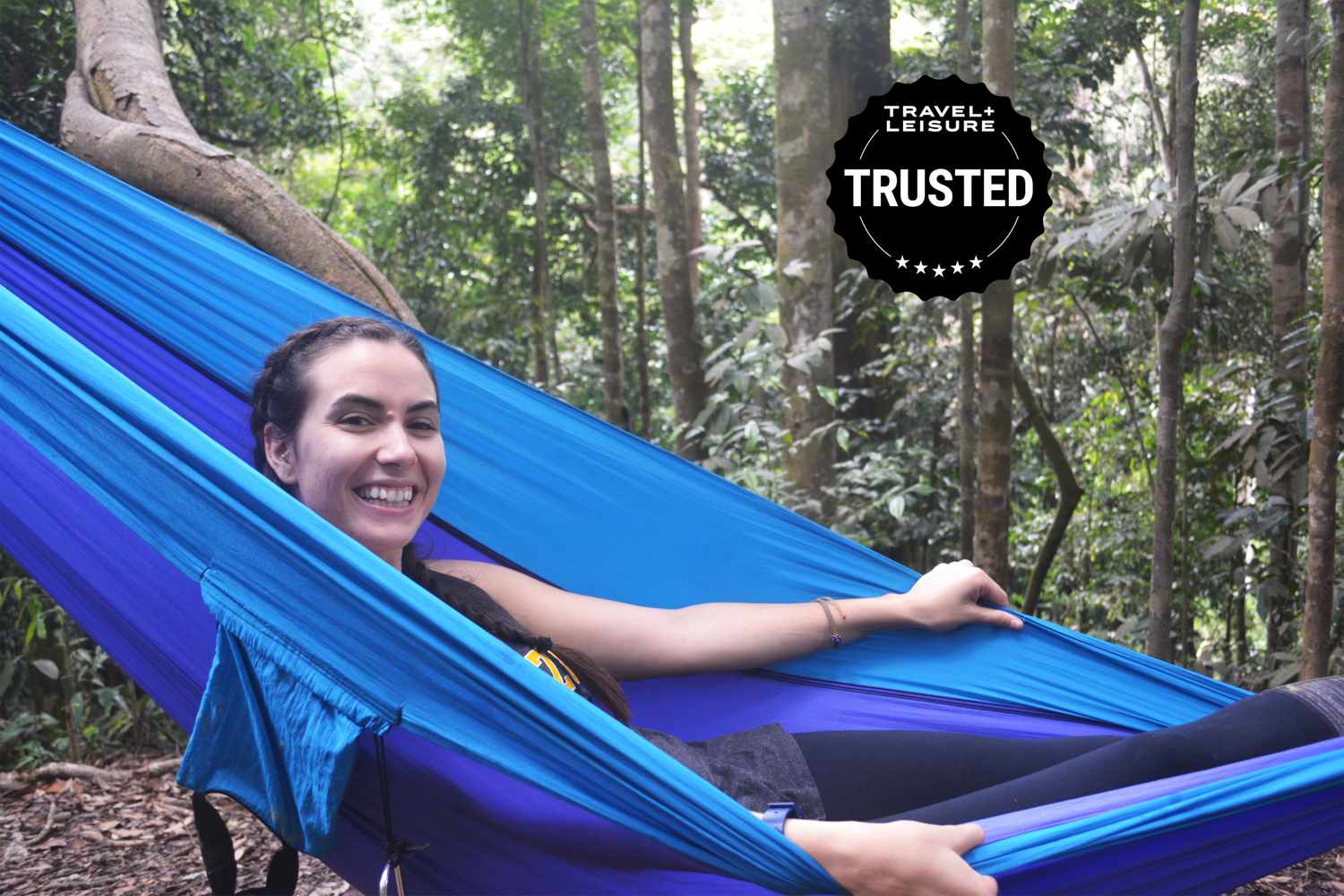
The Details: Specifications and Real-World Durability
When you are deep in the backcountry, gear failure isn't just an inconvenience; it can end a trip. Over the last decade of testing equipment in the field, I’ve seen cheap fabrics shred under the pressure of a single rough night. This is where the specific construction of your camping hammock becomes critical. The Eno SingleNest is built using 70D nylon taffeta, a material known for its breathability and remarkably fast drying time.
What sets this model apart is the high-tenacity fiber weave. Most beginners look at the thin fabric and worry about stability, but the triple-stitched seam construction makes this a fortress. It is rated to hold 400 pounds, which is more than enough for a solo sleeper and a modest amount of internal gear. During a recent 10-year field test analysis, I’ve found that these durable parachute nylon hammock features for long term use really hold up, even after years of exposure to UV rays and abrasive forest environments.
Weight is the natural enemy of the backpacker. This unit weighs only 16 ounces, which is basically the weight of a full water bottle. It compresses into an integrated stuff sack that’s roughly the size of a large piece of fruit, sliding easily into the side pocket of any trekking pack. The included nautical-grade carabiners are made of anodized 7075 aluminum; they are lightweight but offer the security you need when you are suspended several feet off the forest floor.
| Feature | Specification | Field Benefit |
|---|---|---|
| Main Fabric | 70D High Tenacity Nylon Taffeta | Dries quickly, won't rot or mildew |
| Weight | 16 oz / 0.45 kg | Minimal impact on total pack weight |
| Dimensions | 9' 6" x 4' 10" | Compact footprint for tight campsites |
| Hardware | Anodized 7075 Aluminum | Rust-proof and incredibly strong |
| Seams | Triple-Stitched | Prevents fraying and structural failure |
Step-by-Step Setup: How to Hang Your Eno SingleNest
Setting up your camp should be the most relaxing part of your day, not a wrestling match with webbing. This eno singlenest setup guide for beginners focuses on the two most important factors: tree health and sleeping geometry. If you follow these steps, you’ll have a secure and comfortable portable hammock setup in under three minutes.
- Find Your Anchor Points: Look for two live, sturdy trees approximately 10 to 15 feet apart. Avoid "widow-makers"—dead branches or dead trees that could fall on you during the night.
- Deploy Tree Protectors: Never use naked rope or thin cord around a tree trunk. Always use wide tree straps or daisy chain webbing. These distribute the weight and protect the delicate cambium layer of the bark.
- Clip In: Attach your nautical-grade carabiners to the loops on your tree straps. The SingleNest is designed for speed, so you won’t need to tie any complex knots.
- The 30-Degree Rule: This is the secret to a perfect hang. Your straps should depart from the tree at roughly a 30-degree angle toward the ground. This creates a deep sag that is essential for a flat lay.
- Check the Height: When you sit in the hammock, the lowest point should be about 18 inches off the ground—roughly the height of a standard chair. This makes it easy to get in and out and ensures a safe distance if an anchor point shifts.
Pro Tip: Use a structural ridgeline to maintain a consistent sag every time you set up. It’s a simple cord pulled tight between the two ends of the hammock, which keeps the 30-degree angle locked in regardless of how far apart the trees are.
When you are learning how to safely hang a camping hammock between trees, always perform a "sit test" before committing your full weight. Put your hands in the center, press down firmly, and then sit slowly to ensure your anchor points are solid. Choosing the right camping hammock suspension system—specifically one that uses a multi-loop daisy chain—allows for micro-adjustments without having to reposition the straps on the tree.
Beyond the Hammock: The Total System Cost
One thing you should know before heading to the checkout is that your camping hammock is just one piece of a larger puzzle. Navigating a camping hammock buying guide can be tricky because many manufacturers sell the core unit and the suspension separately. To turn the SingleNest into a full overnight shelter, you need to budget for the total system.
Included in the Box:
- One SingleNest Hammock
- Two Anodized Aluminum Carabiners
- One Integrated Stuff Sack
Not Included (Essential for Camping):
- Tree Straps: You cannot hang the hammock without these. Look for "Atlas" or similar daisy chain webbing for the easiest experience.
- Rain Tarp: Essential for protection against dew and downpours.
- Bug Net: Keeps the mosquitoes at bay in humid environments.
- Underquilt: If the temperature drops below 60 degrees Fahrenheit, you will lose body heat through the bottom of the hammock. An underquilt provides the insulation your sleeping bag can't when it’s compressed.
When you are selecting lightweight camping hammocks for backpacking, the base price is often just the beginning. By the time you add a rain fly and insulation, you are looking at a "Total System Cost" that might rival a mid-range tent. However, the versatility of being able to camp on rocky, uneven, or wet ground where a tent could never go makes the investment worth every penny.
Sleeping Comfort: The 11-Foot Rule and Diagonal Lie
I often hear hikers complain that they can't sleep in a hammock because it makes them feel like a banana. The truth is, they are probably lying in it wrong. Because the SingleNest is 9 feet 6 inches in length, it provides plenty of room for lounging, but for a full night's rest, you need to master the diagonal lie.
Instead of lying straight down the center line, shift your feet about 15 degrees to one side and your head 15 degrees to the opposite side. This asymmetric positioning flattens out the fabric under your body, eliminating the "pressure points" on your knees and back. These tips for sleeping diagonally in a camping hammock will transform your experience from a restless nap to a deep, restorative sleep.
The SingleNest is specifically tailored for the solo adventurer. While some prefer a double for the extra room, the SingleNest's 4'10" width prevents "fabric flap"—that annoying extra material that blows in your face when you’re trying to sleep. This streamlined design makes it a top-tier lightweight backpacking hammock for those who count every ounce but refuse to sacrifice quality.
FAQ
Are camping hammocks better than tents?
It depends on your terrain. Camping hammocks excel in forested areas with rocky or uneven ground where a tent footprint won't fit. They are generally lighter for solo travelers and offer better ventilation in hot climates. However, tents are better for treeless alpine environments or group camping where everyone wants to be under one roof.
What equipment do you need for hammock camping?
At a minimum, you need the hammock body, a pair of tree straps, and a suspension system. For overnight use, you should also have a rain tarp for weather protection, a bug net for insects, and an underquilt or sleeping pad for bottom insulation.
Is it comfortable to sleep in a camping hammock?
Yes, provided you set it up correctly with a 30-degree hang angle and sleep at a diagonal angle. This position allows your spine to remain flat rather than curved, offering a level of comfort that many backpackers find superior to sleeping on a thin pad on the ground.
How do you stay warm while hammock camping?
Because you are suspended in the air, wind can strip away your body heat from underneath. Use an underquilt, which is an insulated blanket that hangs outside the hammock, to trap heat. A standard sleeping bag is often not enough because your body weight compresses the insulation, making it ineffective.
How do you hang a camping hammock properly?
Find two sturdy trees 10-15 feet apart. Wrap your tree straps around the trunks at about head-height. Attach the carabiners so that the hammock has a visible sag. The goal is to have the straps at a 30-degree angle to ensure the fabric doesn't feel too tight or too loose when you lay down.
Can two people sleep in a double camping hammock?
While double hammocks are great for two people to lounge in during the day, sleeping together overnight is usually uncomfortable. Most couples find that they naturally roll into each other in the center, which can lead to a cramped and restless night. For sleeping, "one person per hammock" is the golden rule.
Final Advice for Your Next Expedition
If you are ready to ditch the heavy tent and elevate your backcountry experience, the Eno SingleNest is the perfect entry point. It is a rugged, reliable tool that has proven its worth from the Appalachian Trail to the coastal forests of the Pacific Northwest. Just remember to pair it with a set of quality tree straps and practice your hang in a local park before you head into the wilderness.
Whether you're looking for a quick spot to hang during a lunch break or a dedicated sleep system for a thru-hike, the portability and strength of 70D nylon taffeta won't let you down. Grab your stuff sack, find two perfect trees, and start enjoying the view from the best seat in the house.