Quick Facts
- Designation: Gold-tier International Dark Sky Park (Since 2015)
- Sky Quality: Bortle Class 1 (Darkest possible classification)
- Top Viewing Spot: Panorama Point (High visibility and easily accessible)
- Gateway Partner: Torrey, Utah (Certified Dark Sky Community)
- Best Timing: The four days before and after a New Moon
- Park Access: Viewpoints remain open 24 hours a day
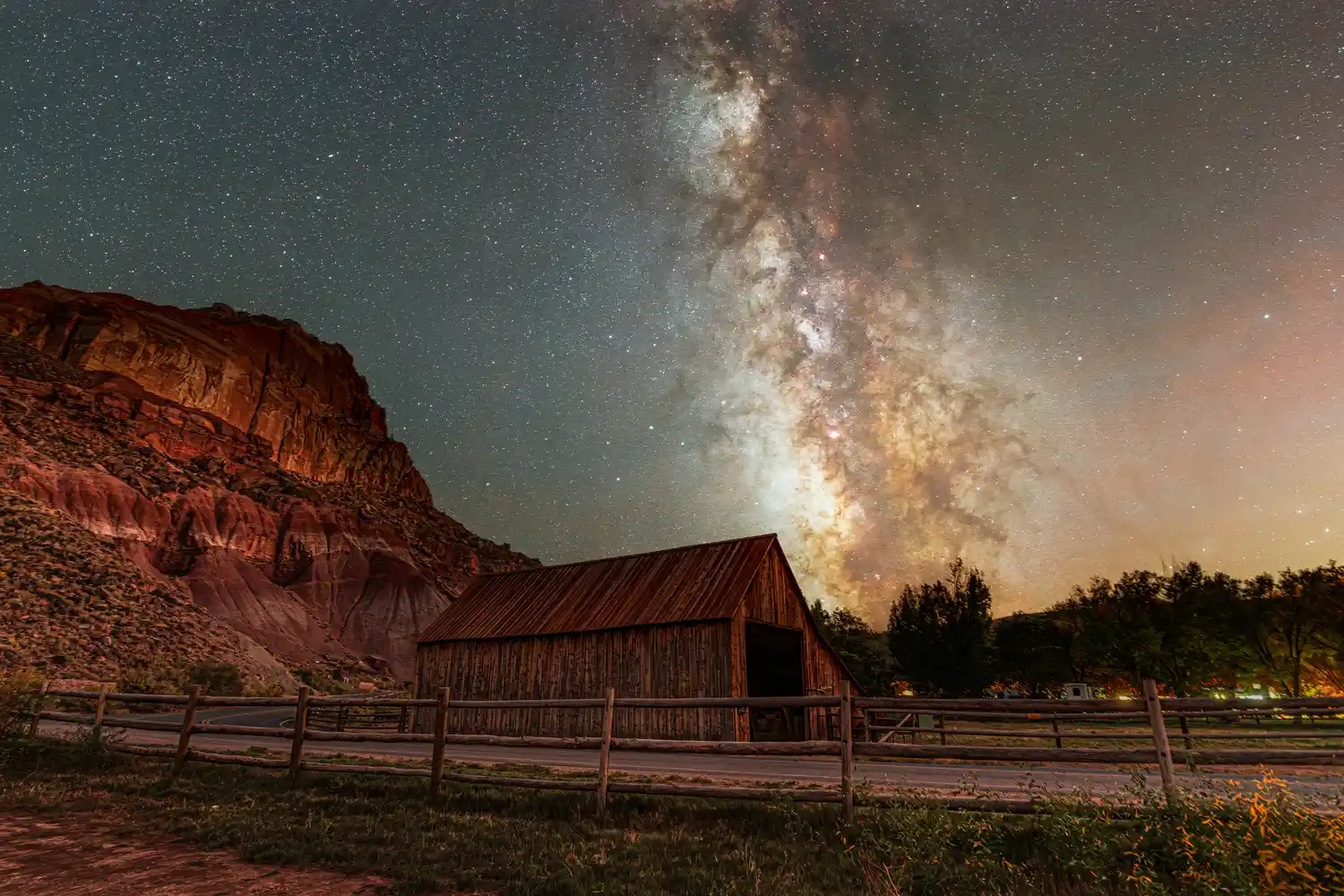
Capitol Reef National Park is a premier stargazing destination due to its International Dark Sky Park certification and remote location in south-central Utah. The neighboring town of Torrey is also a certified Dark Sky Community, ensuring minimal light pollution. This combination creates exceptionally dark skies where the Milky Way and thousands of stars are visible to the naked eye against the park's dramatic sandstone formations.
Science of the Strike: Why the Skies are Clearer Here
As a visual editor, I often look at the world through a lens of clarity and contrast. When you stand on the high-altitude desert plateau of the Colorado Plateau, the air feels different. It is thin, dry, and remarkably still. This is the secret to the world-class Capitol Reef stargazing experience. In technical terms, we call this atmospheric transparency. Because there is so little moisture or dust in the air to scatter light, the stars don't just twinkle; they burn with a steady, piercing intensity.
The park is famous for its Waterpocket Fold geology, a nearly 100-mile long wrinkle in the earth’s crust. This massive geological feature acts as a natural barrier, further isolating the park from the distant glows of major metropolitan areas. This isolation is why the International Dark-Sky Association recognized the park with its highest honor. In April 2015, Capitol Reef National Park was designated a Gold-tier International Dark Sky Park, a ranking reserved for the most pristine night skies on the planet.
Unlike most places in the United States where you might see a few hundred stars, Capitol Reef is rated as a Bortle Class 1 location. On this scale, 1 represents the darkest possible sky. In these conditions, the Milky Way isn't just a faint smudge; it is bright enough to cast visible shadows on the ground. When you are scouting for the perfect shot, the lack of light pollution means you can capture the intricate details of the galactic center visibility without the orange haze that plagues most urban landscapes.
The Dark Sky Community Synergy: Torrey, Utah
What makes a trip here so seamless is the relationship between the park and its gateway town. Torrey Utah dark sky community is more than just a place to grab a coffee before a hike; it is one of the few places in the world that has actively adjusted its urban planning to protect the night. The town has strict lighting ordinances, using shielded fixtures that point light downward rather than into the heavens.
For those looking for a sophisticated basecamp, staying at Skyview Hotel Torrey for stargazing is a revelation. The hotel’s architecture was designed specifically with astrotourism in mind, featuring low-impact lighting and private decks that allow you to watch the cosmos from the comfort of your room. When you check light pollution maps of the region, Torrey appears as a soft, fading ember next to the total ink-black void of the park. If you are wondering how to plan a dark sky trip to Torrey Utah balance your time between late-night sessions at the park's viewpoints and the convenience of high-end lodging that respects the environment.
District Guide: Best Stargazing Spots in Capitol Reef
When it comes to picking best stargazing spots in Capitol Reef orientation is key. The park is divided into three distinct districts, each offering a different flavor of darkness.
The Fruita District
This is the most accessible area for those looking for accessible stargazing spots in Capitol Reef National Park without venturing too far from paved roads. The highlight here is undoubtedly Panorama Point. Just two miles from the visitor center, it offers a 360-degree horizon with no obstructions. It is the gold standard for a Panorama Point Capitol Reef stargazing guide. I often recommend it to beginners because you can park your car and be set up with a tripod in under five minutes.
Nearby, the Chimney Rock trailhead provides a more sculptural foreground. The towering sandstone spires reach up toward the stars, creating a dramatic sense of scale. For those staying overnight, the Fruita Campground is nestled among historic orchards, providing excellent sky visibility while keeping you within walking distance of park amenities.
The Waterpocket District
If you want to escape every trace of humanity, head south. This area is more rugged but rewards the effort with absolute silence. Positions near the Slickrock Divide allow for incredible naked-eye observation of the stars rising over the southern horizon. The lack of any nearby buildings or roads makes you feel as though you have left the planet entirely.
Cathedral Valley District
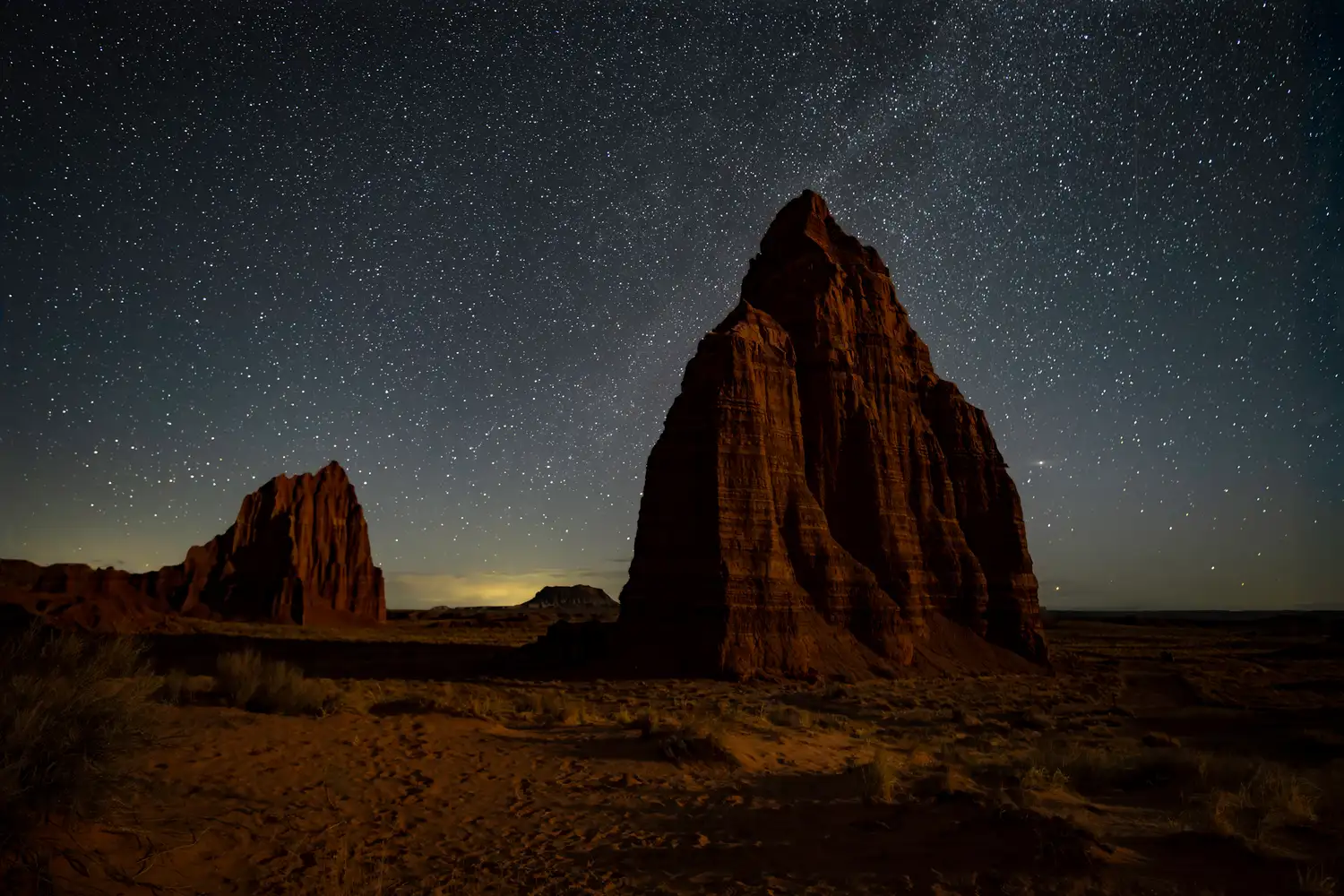
The northern district is the most remote and requires a high-clearance vehicle, but it is a photographer's dream. The geological formations here, like the Temple of the Sun and the Temple of the Moon, sit on a flat desert floor. Under a canopy of stars, these monoliths look like ancient ruins from another world. The Cathedral Valley campground is small and primitive, but it offers the most raw and unfiltered celestial navigation experience in the park.
Timing Your Trip: Celestial Events and Milky Way Visibility
The experience of the night sky changes significantly with the seasons. If your goal is to see the iconic arch of our galaxy, you need to know the best time of year to see Milky Way Capitol Reef. The galactic core is most visible from March through October. In the spring, you have to stay up until the early morning hours to see it rise, while in the late summer and autumn, it is visible almost as soon as the sun goes down.
For those focusing on Capitol Reef astrophotography tips for beginners remember that the moon is your biggest "light polluter." Always consult a new moon calendar before booking your trip. The three nights before, during, and after a new moon will provide the deepest blacks and most brilliant star definition.
- Spring (March - May): Best for early morning Milky Way rising and seeing the zodiacal light—a faint, triangular glow caused by sunlight scattering off dust in the solar system.
- Summer (June - August): This is peak season. The temperatures are mild, and the Perseid meteor shower in mid-August is spectacular.
- Autumn (September - November): The skies are often at their clearest due to lower humidity. This is also when the park hosts the Heritage Starfest, an event that celebrates the cultural and natural importance of the dark sky.
In fiscal year 2016, an estimated 7,400 visitors participated in the park's specialized astronomy and dark night sky-related educational programs, highlighting how popular these seasonal events have become.
Practical Tips for the Darkest Nights
Stargazing in a Bortle Class 1 environment requires a bit of etiquette and preparation. Here is what to bring for stargazing in Capitol Reef to ensure a safe and successful night:
- Red Light Flashlights: White light ruins your night vision and the vision of those around you. It takes about 20 to 30 minutes for human eyes to fully adjust to the dark. One flash of a white phone screen can reset that clock.
- Layered Clothing: Even in the summer, desert temperatures plummet once the sun sets. Bring more layers than you think you need.
- Navigation: Cell service is non-existent in many parts of the park. Download offline maps and have a physical map of the park roads.
- Wildlife Awareness: The desert comes alive at night. Drive slowly on park roads to avoid collisions with mule deer or nocturnal kit foxes.
When you are out there, take a moment to put the camera down. The silence of Capitol Reef at 2:00 AM is as profound as the view. It is a rare chance to see the universe as our ancestors did—unfiltered, immense, and deeply humbling.
FAQ
Is Capitol Reef a certified International Dark Sky Park?
Yes, Capitol Reef National Park was officially designated as a Gold-tier International Dark Sky Park by the International Dark-Sky Association in April 2015. This is the highest possible ranking for sky quality, recognizing the park’s commitment to preserving its pristine natural darkness and providing educational opportunities for visitors.
Where is the best place for stargazing in Capitol Reef?
Panorama Point is widely considered the best spot due to its 360-degree views and easy road access. Other excellent locations include the Chimney Rock trailhead for its dramatic rock formations and the remote Cathedral Valley for those looking for complete solitude and unobstructed horizons.
When is the best time of year to see the Milky Way in Capitol Reef?
The Milky Way core is most visible from late March through early October. During the spring months, the galactic center rises in the early morning hours before dawn. By mid-summer and early autumn, it becomes visible shortly after sunset, making it the most popular time for casual viewers and photographers alike.
Are there guided stargazing programs at Capitol Reef?
The park offers various Capitol Reef ranger-led night sky programs particularly during the peak summer months and the annual Heritage Starfest in the autumn. These programs often include constellation tours and telescope viewings, which were attended by thousands of visitors in recent years to learn about the importance of dark sky preservation.
How dark are the night skies in Capitol Reef National Park?
The skies in Capitol Reef are exceptionally dark, holding a Bortle Class 1 rating. This is the darkest classification on the Bortle Scale, meaning there is virtually no light pollution. In these conditions, the Milky Way is bright enough to cast shadows, and thousands of stars are visible to the naked eye that would be hidden in most other parts of the country.