Quick Facts
- Status: In 2017, Aotea became the first inhabited island in the world to be designated an International Dark Sky Sanctuary by the International Dark-Sky Association.
- Visibility: The night sky is so clear that observers can see approximately 10 times more stars than in typical urban or suburban environments like Auckland.
- Darkness Rating: The sky has been measured at an average of 21.79 magnitudes per square arc second, significantly higher than the 21.5 required for top-tier sanctuary status.
- Best Months: February to October for the Galactic Core; June/July for the cultural celebration of Matariki.
- Access: Accessible via a 35-minute flight from Auckland or a 4.5-hour car ferry across the Hauraki Gulf.
- Cultural Significance: Home to ancient Māori star lore and celestial navigation traditions used for trans-Pacific waka voyages.
Reach Aotea Great Barrier Island by a short flight from Auckland or a 4.5-hour ferry. As a designated Dark Sky Sanctuary New Zealand, Great Barrier Island stargazing offers unparalleled views of the cosmos due to its total reliance on off-grid power and minimal light spill.
The Science of Darkness: Why Aotea is Unique
Stepping off the small plane onto the tarmac at Claris, the first thing you notice is the silence. But as the sun dips below the horizon, the real show begins. Aotea is not just dark; it is scientifically, profoundly black. Unlike many mainland destinations that suffer from the creeping orange dome of urban light pollution, this island is shielded by 100 kilometers of Pacific Ocean. This ocean buffer, combined with a total lack of streetlights and a population that lives entirely off-grid using solar and wind power, creates a pristine wilderness for the eyes.
The island's commitment to preserving its nightscape is reflected in its Bortle scale measurements. In the world of astro-tourism, the Bortle scale measures the night sky's brightness. Most cities sit at a Class 8 or 9, where only a few stars are visible. Aotea consistently hits the peak of the scale. The island's darkness has been officially measured at an average of 21.79 magnitudes per square arc second, which comfortably exceeds the stringent 21.5 threshold required for the world’s most elite International Dark Sky Sanctuary status.
It is important for visitors to understand the distinction between a Dark Sky Park and a Dark Sky Sanctuary. While parks are often uninhabited conservation areas, a sanctuary is a place where a local community actively works to protect the darkness. On Great Barrier Island, this means residents use shielded lighting and conscious energy habits to ensure the sky remains a resource for future generations. This rare human-nature harmony is what makes Great Barrier Island stargazing a bucket-list experience for serious astro-enthusiasts and casual observers alike.
Māori Star Lore: Reading the Ancestral Map
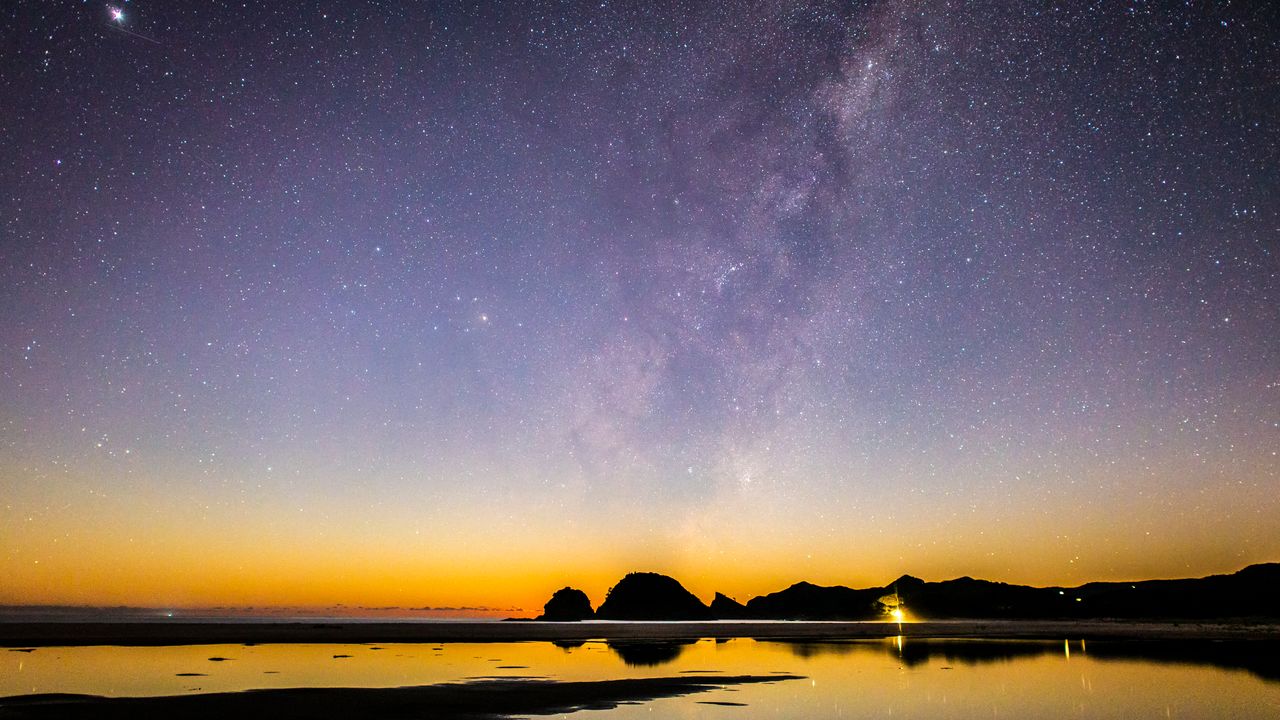
For the people of Aotea, the stars are much more than distant burning suns. They are a cultural storybook, a calendar, and a foundational GPS. Centuries before GPS satellites orbited the earth, Polynesian navigators used celestial navigation to guide their waka across the vast Pacific to reach these shores. They read the rising and setting points of stars as if they were milestones on a highway.
One of the most captivating pieces of Māori star lore concerns the constellation Scorpius. To many Western eyes, it looks like a scorpion, but in the southern hemisphere, it is Te Matau-a-Māui—the great fishhook of the trickster god Māui. According to legend, Māui used this magical hook to pull the North Island of New Zealand from the depths of the sea. Seeing this "hook" hanging vertically over the dark silhouette of the island’s mountainous spine is a hauntingly beautiful experience that connects the viewer to the deep history of the land.
Furthermore, the island follows the Maramataka, the Māori lunar calendar. This system doesn't just track time; it dictates the best days for fishing, planting, and resting based on the moon's phase and the position of specific stars. During the winter months, the appearance of Matariki (the Pleiades) marks the Māori New Year. This is a time of reflection and celebration on Aotea, where indigenous knowledge and celestial bodies intertwine to create a sustainable rhythm of life that persists even in the modern age.
Planning Your Celestial Escape: When to Go
Choosing the best time for Great Barrier Island stargazing depends heavily on what you want to see. New Zealand’s southern sky changes dramatically with the seasons. While the island is a year-round destination, the winter months from June to August provide the most favorable conditions. The cold air holds less moisture than warm summer air, resulting in sharper, more stable views of the cosmos. This is also when the stunning core of the Milky Way is positioned directly overhead, creating a dense ribbon of starlight that can actually cast shadows on the ground.
If you visit during the summer months, you will lose the Milky Way core for part of the night, but you gain visibility of the Magellanic Clouds—two satellite galaxies of our own that are only visible from the southern hemisphere. Regardless of the season, the most critical factor for your Great Barrier Island travel tips is the moon cycle. To see the maximum number of stars, you must plan your visit during the waning moon or around the New Moon. A full moon is so bright on Aotea that it acts like a natural streetlight, washing out the fainter nebulae and distant galaxies.
| Attribute | Winter (June - August) | Summer (December - February) |
|---|---|---|
| Atmospheric Clarity | High (Dry, cold air) | Moderate (Higher humidity) |
| Celestial Highlights | Milky Way Core, Matariki | Magellanic Clouds, Orion |
| Darkness Level | Darkest (longest nights) | Short nights, high brilliance |
| Comfort Level | Chilly (Warm layers needed) | Mild and pleasant |
For those looking to see specific planets, the 2024-2025 window offers brilliant views of Jupiter and Saturn. These gas giants often look like bright, unblinking beacons in the sky, and even a modest pair of binoculars can reveal the moons of Jupiter or the elongated shape of Saturn's rings.
Top Stargazing Spots & Experiences
While you can see an incredible number of stars from almost any clearing on the island, a few specific spots offer a truly immersive experience. Medlands Beach is arguably the premier location for independent stargazing on Great Barrier Island. Here, the white sand acts as a natural viewing platform where the sound of breaking waves provides a rhythmic soundtrack to the celestial display. It is a place where you can sit and watch the Southern Cross tilt slowly across the sky while feeling the pulse of the Hauraki Gulf.
For a more educational experience, guided stargazing tours Great Barrier Island recommendations often start with 'Good Heavens'. Local guides set up large-aperture telescopes and use high-powered lasers to point out deep-sky objects like the Jewel Box cluster or the Eta Carinae Nebula. These sessions are perfect for beginners who want to move beyond just looking up and start understanding the mechanics of the universe. They often provide "moon chairs" and hot chocolate, making the experience both educational and incredibly cozy.
Equipment Tips for Pristine Wilderness Photography
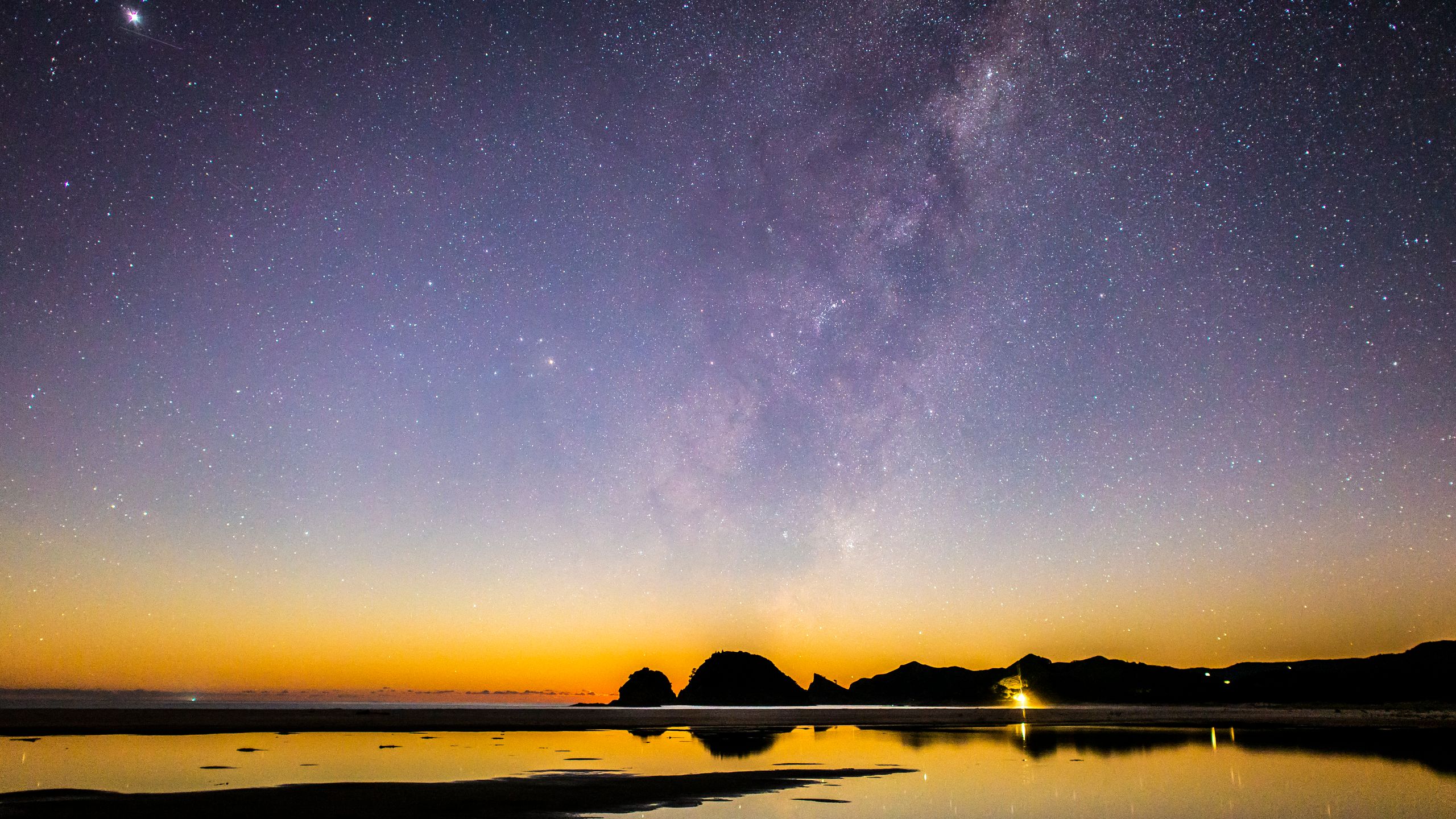
As a visual editor, I often get asked how to capture the magic of Aotea on camera. You don't need the most expensive gear, but you do need a plan for nightscape photography.
- Tripod is Non-Negotiable: Even the best hand-holding technique cannot stabilize a 20-second exposure. Use a sturdy tripod and a remote shutter release (or a 2-second timer) to prevent camera shake.
- Wide and Fast Lenses: A lens with a focal length between 14mm and 24mm is ideal. Look for an aperture of f/2.8 or wider to gather as much light as possible.
- Manual Focus: Cameras struggle to find focus in pitch black. Switch to manual focus and use the "live view" screen to zoom in on a bright star, turning the focus ring until the star becomes a tiny, sharp point.
- Keep Your Batteries Warm: Cold winter nights on Aotea drain battery life quickly. Keep a spare battery in your pocket close to your body heat.
FAQ
Is Great Barrier Island a Dark Sky Sanctuary?
Yes, Aotea Great Barrier Island was officially certified as an International Dark Sky Sanctuary in 2017. It was the first inhabited island in the world to receive this prestigious designation, recognizing its exceptional quality of starry nights and a commitment to protecting its nocturnal environment through off-grid living and responsible light usage.
When is the best time for stargazing on Great Barrier Island?
The best time for Great Barrier Island stargazing is during the winter months of June through August, when the air is crisp and clear, and the Milky Way core is directly overhead. For the most stars, time your visit during the New Moon phase or the week preceding it when the sky is at its darkest.
Do I need a guide for stargazing on Great Barrier Island?
You do not strictly need a guide, as the entire island is a Dark Sky Sanctuary with minimal light pollution, allowing for incredible independent viewing from your accommodation or any beach. However, booking a guided session with local experts is highly recommended for beginners who want to use professional telescopes and learn about Māori star lore and celestial navigation.
How do you get to Great Barrier Island for stargazing?
To get to Aotea Great Barrier Island for stargazing, you can take a 35-minute scenic flight from Auckland Airport or North Shore Aerodrome. Alternatively, there is a passenger and car ferry that departs from downtown Auckland, taking approximately 4.5 hours to reach the island.
Where are the best spots for stargazing on Great Barrier Island?
Medlands Beach is world-renowned for its clear eastern horizon and dark skies. Other excellent spots include the dunes at Awana, the heights above Tryphena, and any of the off-grid eco-lodges located in the center of the island. Because there are no streetlights, almost any spot away from indoor lighting offers a five-star view.
Respecting the Darkness
As you plan your journey to this remote corner of New Zealand, remember that the darkness is a fragile resource. Protect the local environment by using red-light torches, which preserve your night vision and minimize disturbance to sensitive local species like the kororā (little blue penguin) and the Chevron skink.
By visiting Aotea, you aren't just taking a trip; you're participating in a global movement to preserve the night. Whether you’re a photographer chasing the perfect shot of the Southern Cross or a traveler seeking a moment of quiet reflection under the galactic core, Aotea offers a rare chance to see the universe exactly as our ancestors did—untouched, infinite, and awe-inspiring.